Mount Airy Chrysler Dodge Jeep Ram FIAT

Blog / About Mount Airy CDJRF

How BEVs Could Be the Future (And Why They May Not Be)

Electric Vehicles
Demand for plug-in electric vehicles (EVs) is growing, though they still only claimed about 2% of the U.S. market share in 2018 (global market share is similar). That number includes battery-operated vehicles (BEVs) and plug-in hybrid electric vehicles (PHEVs).
The thought on everyone's mind: is this the future of driving?
The primary difference between the two types of vehicles is that a BEV runs solely off the energy from the vehicle's battery, while a PHEV uses the battery alongside a fuel tank that kicks in at various intervals. There would be clear benefits to drivers and the environment if BEVs were to become mainstream. However, there are currently just too many drawbacks to know how successful the BEV market can become. While many proponents are hopeful that BEVs will eventually become commonplace, the future of these vehicles remains largely unknown due to a number of unanswered questions and issues yet to be resolved. For instance, how will drivers have access to charging their vehicles? Will there be convenient charging stations like there are gas stations? Also, can we expect improvements to be made with batteries in the future? This article will explore the potential advantages of a BEV-driven world and the challenges that BEV drivers currently face, and we'll take a look at some of the main questions and issues that are too prevalent to be ignored.

ADVANTAGES OF A BEV-HEAVY MARKET

Even though we are still in the early stages of developing electric vehicles, BEVs currently come with many benefits, and it's not hard to see how these benefits could become even more impactful as technology improves. Lower Operating Costs For one, it's much cheaper to charge a BEV than it is to run a traditional vehicle off of gas; it's actually about one-third of the cost. Also, a BEV contains very few moving parts compared to a traditional vehicle, which means it's less expensive to maintain. For instance, with a BEV you don't have to worry about servicing a starter motor, fuel injection system, exhaust system, or radiator, among many other components. Though many improvements need to be made to these vehicles' batteries, most BEV manufacturers provide an eight-year warranty on their batteries even now. Environmental Benefits Some of the most obvious advantages are those that benefit the environment. BEVs have virtually no exhaust emissions, which means they emit much less pollution than traditional vehicles do. And if you use renewable energy for charging, greenhouse gas emissions are reduced even lower. For example, rather than charging from the grid, you can use a polar PV system while there's daylight. If you must use the grid, you can still minimize greenhouse gas emissions by purchasing green power from your electricity company. Even the manufacturing of some of the top BEVs is eco-conscious. For instance, the Ford Focus Electric and Nissan Leaf are largely made of recycled and bio-based materials, such as plastic bags, water bottles, and second-hand car parts and home appliances. Health and Safety Along with the financial and environmental benefits, BEVs can help improve our health and safety. Less pollution from exhaust means better air quality, which can reduce health problems caused by pollution, and BEVs create much less noise pollution than traditional vehicles. Also, since BEVs typically have a lower center of gravity, they are less likely to roll over. Furthermore, fires aren't as much of a risk, and the body structure of BEVs can prove more durable in a collision.  

DISADVANTAGES OF CURRENT BEV MARKET

Of course, there are also drawbacks to BEVs. While they have enjoyed success, it has been with a limited group of consumers. Charging Times Tesla has led innovation in the BEV market in many ways, including its Supercharger networks, which can charge vehicles in about 30 minutes. However, that's still a lot more time than it takes to fill the gas tank of a traditional vehicle. What's more, scientists behind the efforts of manufacturers like Tesla and Toyota have their doubts about the possibility of reducing charging times enough to satisfy mainstream consumers. And since Toyota has been in the electric vehicle game for over 20 years, that speaks to the magnitude of this problem. Electricity Generated Another prevalent issue with BEVs is that they require electricity, which must come from somewhere. In states like California, most of the electricity comes from natural gas supplies, but states like West Virginia use coal to generate up to 90% of its electricity. Overall, about 38% of electricity in the United States is generated by coal. This begs the question: just how clean and green are electric cars? In short, it depends on where in the country you are driving. Furthermore, the lithium-ion batteries used by manufacturers like Tesla contain components that can potentially harm the environment by way of ecological toxicity and contributing to global warming. Limited Categories Finally, you don't see any BEVs that fall under the heavy-duty truck category. This is mainly because the technology isn't workable for truck applications—and it won't be anytime soon. This is a serious problem because there are 2 to 3 million heavy-duty trucks on the road in the U.S. Much of the American economy depends on Class 8 commercial trucks, which guzzle 30 times more gas than the average automobile (about 35 billion gallons each year). It's difficult to see how BEV technology could advance enough to accommodate the heavy-duty truck category in the foreseeable future. However, if such trucks were able to be produced in an electric format, it could drastically decrease oil dependence and significantly benefit the trucking industry financially.  

THE IMPORTANCE OF CHARGING STATIONS

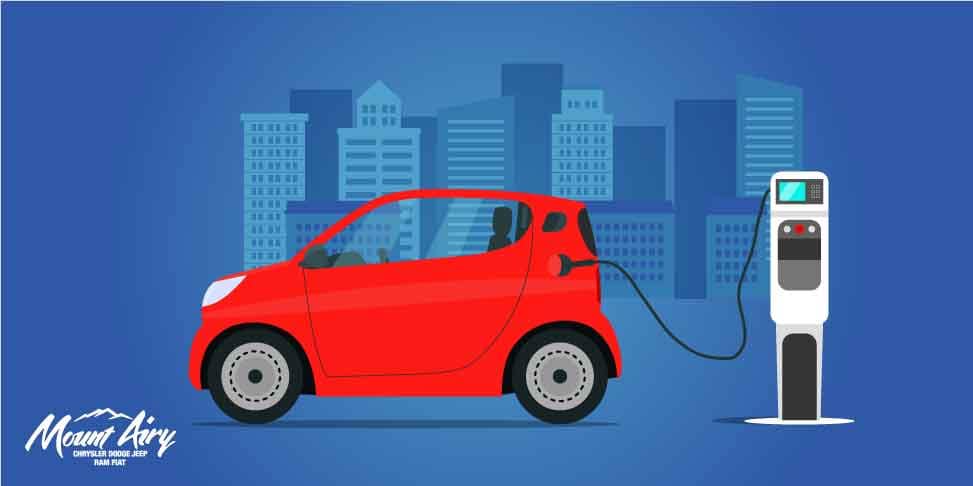
There are currently about 20,000 public charging stations and 57,000 outlets for plug-in electric vehicles in the U.S. Here's the thing: 4,800 of those stations and 18,200 of those outlets are found in California. Not surprisingly, California has also accounted for almost half of all BEV sales in the country since 2011. If there is hope for the BEV market to experience continued growth—and especially if battery-operated cars are to become mainstream—there must be more charging stations created throughout the country. Charging Station In a sense, the future popularity of BEVs in any particular area of the country depends on the accessibility of charging stations in that area. However, it gets tricky because states that don't sell a lot of BEVs are less inclined to invest in public charging stations, but if they never decide to invest, then their sales will probably not improve by much. Therefore, there must be a break in the cycle at some point if BEVs are to become commonplace in the future. Sure, there are some people who could charge their BEV at home, but that's a limited category of consumers. Without an adequate number of charging stations open to the public, much like gas stations are, BEVs will never reach the mainstream. To put it into perspective, there are approximately 168,000 public gas stations in the U.S.—more than eight times the number of charging stations. The majority of consumers will never make the jump to BEVs until that gap is dramatically closing.  
THE ROLE OF BATTERIES

As essential as charging stations are for the future of BEVs, batteries may play an even more important role. And BEV batteries need to undergo a lot of development if electric vehicles are to become commonplace. Battery Anxiety The term "battery anxiety" is often used in reference to one running out of battery power on their smartphone. We've all seen the symptoms: a family member searching frantically for a charger cable; a co-worker turning their desk over, only to ask you if they can borrow a charger; even a stranger asking if they can PowerShare with your phone. Chances are you've experienced the symptoms yourself. In a study administered by electronics manufacturer LG, 9 out of 10 people showed signs of battery anxiety. The same logic is behind the term "range anxiety" in reference to electric vehicles. If such a phenomenon has that kind of grip on people with smartphones, you can imagine the impact of this anxiety when it comes to driving a car. Range anxiety is one reason why many consumers won't even consider going the BEV route. Most BEVs allow drivers to go about 100 miles fully charged (the Tesla Model S is an exception, as it allows drivers around 250 miles). This is another reason why the scarcity of charging stations is such a severe problem. Nonetheless, many manufacturers have pledged to develop BEVs that will hit about 200 miles per charge. That would surely make a big difference, but it's still a far cry from a conventional vehicle that can go 300 to 400 miles on a full tank of gas. The Problem with Lithium-Ion Batteries Most newer electric cars these days are powered by lithium-ion batteries. These batteries are not without their advantages, such as the fact that they are light-weight (as compared to lead-acid batteries), relatively low-maintenance and can last for 8-10 years. However, there are some serious issues to consider as well. For example, lithium-ion batteries are expensive. While a high-end lead-acid battery—as used in most traditional vehicles—costs around $120, a typical lithium-ion car battery costs in the $1,700 range. Also, lithium is highly reactive. This means if they are damaged or installed incorrectly, they can explode. Moreover, the cells used in lithium-ion batteries are made with rare-earth metals; the supply of these metals is limited, and they're dangerous to mine. Most workers who are tasked with retrieving rare-earth metals are laboring in harsh conditions, to say the least (and in some cases this means illegal child laborers). The Prospect of Flow Batteries Enter a new hope for BEV proponents: the "flow battery." Scientists are currently working on this new type of refillable battery that they hope will replace lithium-ion as the commonplace battery in BEVs. The strongest appeal of the flow battery is that it solves most of the biggest problems consumers have with BEVs. Depending on the model of vehicle and the power source used, it can take anywhere from 30 minutes to 10 hours to fully charge a lithium-ion battery in a BEV. If the flow battery is a success, it will allow drivers to empty their battery liquid and pump in new liquid in minutes—roughly the same time it would take to fill a gas tank. What's more, since the basic infrastructure is already there, it would be easier for gas stations everywhere to be retrofitted to pump this battery liquid in place of gas. This means that the scarcity of charging stations would no longer be a problem—thus, no more range anxiety. There is still a lot of progress to be made in the development of flow batteries, but it's possible we will see some form of them in the next three years.  

THE BOTTOM LINE

It's easy to see how drivers and the environment would benefit from a BEV-driven market. All things considered, they are a more eco-conscious alternative to traditional vehicles, they are cheaper to operate, and they offer health and safety benefits. That said, BEVs have their share of drawbacks as well. If BEVs are ever to enter the mainstream, more charging stations and better batteries must be made available. It looks like the work is being done to solve these issues, but only time will tell whether or not BEVs are indeed the future.     -Alex Watson  

Posted in:

Related Posts

CARFAX 2025 Top-Rated Lifetime Dealer

Mount Airy Chrysler Dodge Jeep Ram Fiat Named CARFAX 2025 Top-Rated Lifetime Dealer!

Mount Airy Chrysler Dodge Jeep Ram Fiat Named a CARFAX 2025 Top-Rated Lifetime Dealer Mount Airy Chrysler Dodge Jeep Ram Fiat is proud to announce that we have been recognized as a CARFAX 2025 Top-Rated Lifetime Dealer, one of the most respected honors in the automotive industry. This prestigious designation is awarded to dealerships that consistently deliver outstanding customer experiences year after year. CARFAX determines Top-Rated status based entirely on verified customer reviews, making this recognition a direct reflection of the trust and satisfaction of our customers. Excellence Driven by Our Customers Being named a CARFAX Top-Rated Lifetime Dealer means our dealership has achieved Top-Rated status for multiple consecutive years. CARFAX Top-Rated Dealers average an impressive 4.6 out of 5 stars, based on millions of verified customer reviews across the country. This achievement highlights our team’s dedication to providing honest, transparent, and customer-focused service to drivers in Mount Airy and the surrounding communities. Gregg Cleary, Chief Revenue Officer at CARFAX, shared: “It’s exciting to celebrate the success of our CARFAX Lifetime Dealers. Powered by more than 10.6 million verified ratings and reviews, this recognition reflects real customer experiences and highlights dealerships built on trust and transparency.” Transparency You Can Trust At Mount Airy Chrysler Dodge Jeep Ram Fiat, we believe buying a vehicle should be simple, informed, and stress-free. As a CARFAX Top-Rated Lifetime Dealer, we are committed to providing the transparency customers deserve. Our customers benefit from: Free CARFAX Vehicle History Reports Every eligible pre-owned Chrysler, Dodge, Jeep, Ram, and Fiat vehicle in our inventory includes a complimentary CARFAX Vehicle History Report. Verified Vehicle Information CARFAX reports provide important details such as accident history, service records, and title information so you can shop with confidence. CARFAX for Life Through our partnership with CARFAX, customers can also receive maintenance reminders and service updates to help keep their vehicles running smoothly long after purchase. Thank You to Our Customers This recognition would not be possible without the continued support of our customers. Your reviews, feedback, and trust are what make achievements like this possible. Whether you’re searching for a new Ram truck, a capable Jeep SUV, a Dodge performance vehicle, or a reliable pre-owned car, our team is committed to delivering the same honesty, transparency, and service that earned us this honor. We invite you to experience the difference of a CARFAX Top-Rated Lifetime Dealer. Visit Mount Airy Chrysler Dodge Jeep Ram Fiat today and discover why so many drivers trust us with their automotive needs.

Car Buying for Women | Mount Airy Chrysler Dodge Jeep Ram FIAT

Women Are Redefining Car Buying

Women Are Changing the Way Cars Are Bought If you’ve been to Mount Airy Chrysler Dodge Jeep Ram FIAT recently, you may have noticed something exciting: more and more women are walking confidently into the showroom, ready to find a vehicle that fits their lifestyle — and they’re doing it on their own terms. According to dealership leader Dean Girgenti, that’s no accident. He’s seen how women have transformed the car-buying experience by bringing preparation, insight, and patience to what was once seen as an intimidating process. “A lot of guys get stuck in a ‘got-to-have-it’ mindset,” Dean explains, “while women tend to be more flexible and analytical. They do the research, compare options, and make smart decisions that get them great deals.” That mix of thoughtful planning and confidence has helped women buyers earn a reputation for being among the most informed and successful shoppers in today’s auto market. A New Era of Car Buying: Women in the Driver’s Seat Not long ago, visiting a dealership alone could feel intimidating for many women. Sales floors were often geared toward male buyers, and the process felt like something to be “handled” rather than enjoyed. But that’s the old way of thinking. Today’s world is very different. Industry observers note that women now influence the majority of vehicle purchases — not just for themselves, but for their families and households as well. Recent research shows that women’s preferences guide nearly every step of the buying journey, from online research to final decisions. And it makes sense. Women are naturally thorough shoppers. They read reviews, check safety ratings, compare fuel economy, and weigh maintenance costs before setting foot on a lot. That same diligence translates into better deals and vehicles that truly meet their needs. The Numbers: Women’s Growing Influence Industry experts agree that women are one of the most powerful forces in today’s automotive market. Many studies suggest that women influence around eight out of ten vehicle purchase decisions — both new and used. While exact figures vary, the trend is unmistakable: women’s voices now shape nearly every dealership experience in America. Recent registration studies also reveal that brand preferences differ based on lifestyle rather than gender stereotypes. In several mainstream brands, women now account for well over half of all personal new-vehicle registrations, while segments centered on large trucks still lean more male. This diversity shows that there’s no single “women’s car” — instead, there’s a wide range of vehicles chosen for practical, financial, and family reasons. At a broader level, national dealership data shows that overall satisfaction and transparency have increased over the past two years. With inventories returning to normal and digital tools making research easier, buyers — especially those who approach the process methodically — are finding better deals and more enjoyable shopping experiences. It’s a win for everyone, but especially for the well-prepared, research-driven buyer. Why Women Often Get Better Deals When you take emotions out of the process and replace them with solid research, you instantly gain negotiating power. That’s something Dean and his team at Mount Airy CDJRF see every day. Women tend to: Research more thoroughly before visiting a dealership. They know what trim levels, warranties, and features are worth — and which ones aren’t. Avoid impulse decisions. Instead of chasing a color or a style, they focus on value, safety, and practicality. Stay flexible. Having a few options in mind (instead of one “must-have” vehicle) gives them more room to negotiate and find the best overall deal. Many dealership professionals agree that these qualities often lead to fairer, more balanced transactions. It’s not about being a “tough negotiator” — it’s about being an informed one. From Intimidated to Empowered There was a time when women were told to “bring someone along” when buying a car. That idea is long gone. Modern dealerships — including Mount Airy Chrysler Dodge Jeep Ram Fiat — have worked hard to make the experience comfortable, transparent, and pressure-free. Here’s how that looks in practice: Respect comes first. Every guest is treated with courtesy and honesty, no matter their experience level. Clear communication. We explain every figure, from price to financing, so nothing feels hidden or confusing. A safe, relaxed environment. Our goal is to make sure every buyer — woman or man — feels completely at ease asking questions and exploring options. Women shouldn’t feel like they have to “brace” for the process. Instead, they can look forward to finding a vehicle that fits their lifestyle, whether that’s a sporty Jeep Wrangler, a capable Ram truck, or a family-friendly Chrysler Pacifica. Women Shop Smart and Confidently If you’re planning your next purchase, here are a few simple habits that women say can make a huge difference — and they’re the same strategies we see our most confident customers use: Start with research. Look up average selling prices, warranty coverage, and financing options online. Check safety and reliability ratings. Trusted automotive organizations publish yearly rankings for safety and performance — great tools for narrowing your search. Bring your notes. Don’t hesitate to show your research when negotiating. It’s proof you’ve done your homework and expect transparency. Be flexible. Have a few models, colors, or trims in mind. That flexibility often leads to better pricing and faster deals. Understand the full cost. A lower monthly payment isn’t always the best deal. Compare total cost, interest rate, and term length to see the real picture. The team at Mount Airy CDJRF is happy to walk through any of these steps with you — no pressure, no rush. Electric Cars, Hybrids, and What’s Ahead The rise of electric and hybrid vehicles is another area where women are shaping the market. Current thinking among industry analysts suggests that as EVs become more affordable and charging more convenient, more women are considering them as a realistic choice for their next car. Still, experts say practicality drives these decisions: reliability, safety, and total cost of ownership remain the top priorities. That’s why the Mount Airy team takes time to compare fuel, maintenance, and incentive differences between gas, hybrid, and electric options — so buyers can make a clear-eyed choice that fits their lifestyle. The Mount Airy CDJRF Promise Here in Mount Airy, we’re proud to serve a community where women are empowered to make smart, confident choices — in life and in the showroom. We know that trust is earned, not assumed. That’s why our team is committed to providing: A respectful, no-pressure environment where every buyer feels valued. Clear, honest information at every step of the process. Supportive guidance from a staff that listens first and sells second. Whether you’re researching your first car, upgrading for a growing family, or exploring electric options, we’re here to make sure you feel completely comfortable and confident — because that’s what modern car buying should be. Car buying in 2026 and beyond is about partnership, not persuasion. Women aren’t just part of the market — they are driving it forward. At Mount Airy Chrysler Dodge Jeep Ram FIAT, we’re honored to welcome that progress and proud to be a dealership where respect, transparency, and empowerment come standard.

Should you buy a car at the end of the month?

The Truth About Car Buying in 2025

If you search “Should I wait to buy a car until the end of the month?”, you’ll find plenty of so-called experts insisting that end-of-the-month car buying is the golden ticket to a better deal. But here’s the reality: it’s not that simple. Real customers and dealership employees are weighing in on Reddit, and their insights tell a much more balanced story. Real User-Generated Opinions on Reddit From r/askcarsales: “Does it actually make a difference?” “Sometimes. Sometimes not. Usually not. A lazy salesman might work harder to squeeze that last unit out.” “This is a myth… the best price is the one on the website… everybody will rush to get that deal done quickly.” — Reddit Another thread: “If you want to really play hardball… go in earlier in the month... get an idea of what the price will be OTD… wait for them to call you back…” — Reddit From r/askcarguys: “Best strategies for buying at month-end?” “It has to be negotiated… dealers always want to sell a car more than you want to buy one but with most of them you wouldn’t be able to tell.” “I usually have good luck buying at the end of the month... letting them know I’m there with intention to buy… and that I want the best deal possible.” “Zero… but good luck… nice people get great deals.” — Reddit From r/KiaEV9: “It might be marginally better at the end of a month, especially if a dealership… starts making concessions they weren't earlier.” “On the other side… when books roll over on the 3rd/4th… sales might be eager to get deals done early.” — Reddit Our Take at Mount Airy Chrysler Dodge Jeep Ram Fiat Click To Play Video Click To Play Video   We can’t speak for every dealership, but at Mount Airy CDJRF we don’t see buying at the end of the month as a major advantage. Here’s why: Small-town roots mean relationships matter. Our Scott McCorkle dealerships are based in small, suburban towns where our salespeople are also your neighbors. Many of our employees have been with us for over two decades. Their focus isn’t on chasing quotas—it’s on building trust and helping families come back again and again. Market conditions move faster than the calendar. Prices aren’t dictated by the date. They’re shaped by real-world factors like: Federal Reserve interest rates Supply chain disruptions (like the recent pandemic) Car model changes and discontinuations Manufacturer discounts and incentives These can affect pricing at any point in the month, not just the 30th or 31st. Pricing is more transparent than ever. Over the last decade, automakers have tightened up how much wiggle room dealers have in pricing. That means less “mystery math” and more fairness. It also helps protect long-term resale values instead of creating a race to the bottom on price. Today’s shoppers are savvy. Most buyers know the cost of ownership goes far beyond sticker price. They’re shopping interest rates, considering fuel requirements, and factoring in future maintenance costs. Those elements often make a bigger difference than shaving a few dollars off a monthly payment. Reputation speaks louder than timing. The best way to know if you’re getting a fair deal? Look at a dealership’s reviews and history. If the staff has been there for decades, consistently earns positive feedback, and works to find discounts and financing options, you can be confident they’re focused on your long-term satisfaction. Bottom Line Car buying myths like “wait until the end of the month” don’t tell the full story. At Mount Airy CDJRF, we believe the best time to buy a car is when you’ve found the right vehicle, with the right financing, at a dealership you can trust. And that’s what we aim to deliver—every single day of the month.