Mount Airy Chrysler Dodge Jeep Ram FIAT

Blog / Mount Airy Chrysler Dodge Jeep Ram FIAT Service

The Usefulness of Dash Cams–And The Best Types To Purchase

A running camera can deter theft, vandalism, and accidents on the road.
We’ve all seen dash cams in cars before, but what is their purpose? Why would anyone want a recording of their driving? Come to find out, there are multiple purposes for using dash cams, and all of them are important–important enough that every driver today should have one installed. In the modern age of driving, having a recording of your trips (or accidents, speeding tickets, etc.) can be incredibly beneficial. Let’s see why.
Exactly What is a Dash Cam? A dash cam is a small camera that is mounted to your vehicle’s dashboard, windshield, or rear-view mirror, and its primary function is to record video footage of your trip, as short or as long as it may be, to provide you with a visual record of all the events that took place during the drive. The camera connects to your car’s power supply and it begins recording right at the start of your trip, and it stores the recorded footage on a memory card or some other device that is easily removable. Once your drive and the recording are finished, you can access and review any of the recordings at any time. One of the many things that’s nice about dash cams is that they all come with a variety of features. GPS tracking, night vision, audio recording–these are only a few of the available functions used to provide you with a more comprehensive look at your travels. Imagine the protection against fraud, the deterrent for reckless driving, and even the capability of making memories this one device can offer. Now that we know what a dash cam is and what it does, let’s look into why you should own one. Is It Truly Worth The Purchase? In short, yes. Absolutely it is. Dash cams are invaluable for drivers. This tool can provide valuable evidence for settling insurance claims and even settling legal disputes in the event of a car accident. Moreover, a dash cam can protect you from fraud by recording particular incidents that happen on the road, like staged/phony accidents and false insurance claims. Think of how nice it would be for parents of teen drivers to have a dash cam recording that allows you to monitor their driving behaviors. Your teen might be more apt to follow the rules of the road a bit more conscientiously if they know mom and dad are watching! Another great reason to install a dash cam is to capture those beautiful drives through scenic mountains, forests, etc. With your dash cam, you can record it all. What Are The Different Types of Dash Cams? There are a lot of dash cams to choose from. Do a quick Amazon search and you will be inundated with cams all offering different features and capabilities. Here are a few of our favorite types of dash cams along with a quick description of what they can do:
  • Single Channel Dash Cams
These are the most basic type to purchase, as they only record footage from the front of the car. Since they have one, primary function these are usually the most affordable option, and they work well for drivers who only need a basic recording of the events that took place in the front of their vehicle. You can purchase a single-channel cam for around $100.
  • Dual Channel Dash Cams
Dual-channel cams offer footage from both the front and the rear of the car, which makes them a great choice for drivers who want a recorded view of their travels. It’s true most of the action takes place up front, but there can be plenty happening behind you as well. Not a bad idea to get the front and rear view. Dual-channel dash cams come at around $200-$300, depending on the brand.
  • 4K Dash Cams
4K dash cams provide drivers with a high-definition video recording. The footage a 4K captures is incredibly clear and detailed without blemish and is a must for anyone who knows they will be coming across a scene they will want to be recorded with wonderful clarity. To nobody’s surprise, this type of dash cam is a bit more expensive, running anywhere from $375 to $500.
  • Rear-View Mirror Cameras
Cameras that mount to your car’s rear-view mirror seamlessly blend into the interior, so passengers might not even notice it if you don’t share that you have one. These types of cameras are made to discreetly provide a recording without interfering with your view of the road, as well as, the car’s natural aesthetic. This mirror cam most often comes with a larger screen that can display a live feed of your surroundings, and you can check your footage as you drive. *A quick note on lithium-ion and capacity battery-powered dash cams: lithium-ion and supercapacitor are the two most commonly used dash cam battery types. Both have their good and not-so-good aspects, mostly depending on how they are used, but we have found that the supercapacitor is more efficient, as it tends to have a longer running life due to its ability to work under extreme heat and cold weather conditions. Even More Benefits of Having a Dash Cam Personal security is one of the best reasons to drive with a dash camera. A running camera can deter theft, vandalism, and accidents on the road. Some even offer a parking feature that allows drivers to monitor the vehicle’s surroundings while the car is parked and left alone. Safety is a reason alone that dash cams are flying off the shelf, especially during the holiday season and times of high travel and therefore high theft. The ability to have video evidence at the ready is a wonderful way of safekeeping video evidence you have captured of a crime or car accident. This evidence is an incredibly valuable asset to use in any sort of legal proceedings, as it can dispute against fraudulent insurance claims–something we see happening way too often these days. Businesses have even turned to dash cams as a way of encouraging and monitoring safe driving (think delivery trucks and various taxi services). Could there be a better way to keep drivers aware of their actions and driving behaviors than installing a dash cam? We think not. You can consider your dash cam as another set of eyes on the road, working in tandem with you to make sure your travels are safe. With this added layer of security, drivers can feel more confident knowing their journey is being recorded and anything captured can be seen and used as needed. Anyone who travels often or who spends copious amounts of time on the road (for work or pleasure), certainly should have a dash cam. They can be used to capture interesting images, scenic footage, or as mentioned above save you from entering into dangerous situations. Consider purchasing a dash cam today, and start recording your travels, no matter how big or small.    
Posted in:

Related Posts

Chrysler Dodge Jeep Ram FIAT Fuel Guide

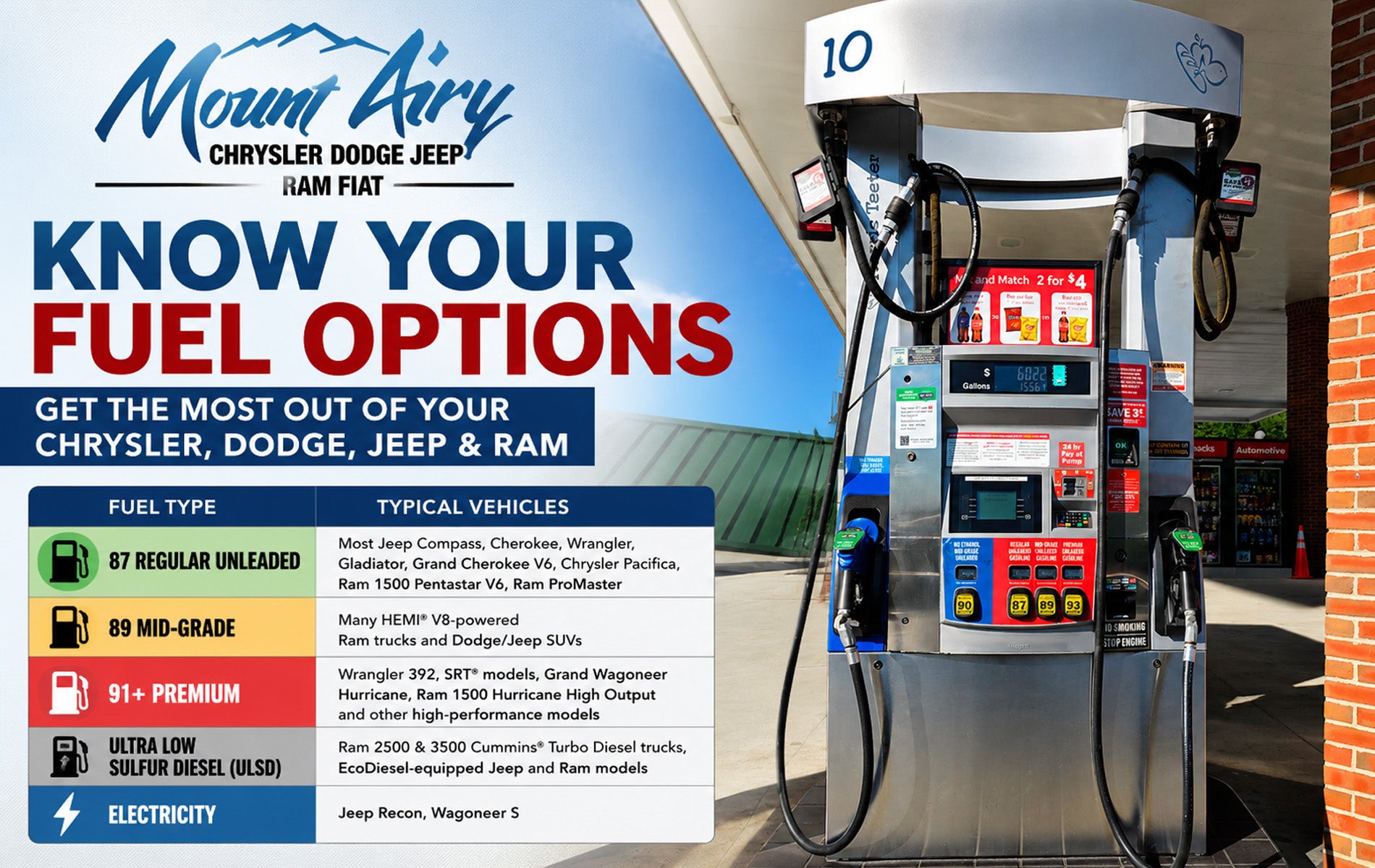
Know Your Fuel Options: Get the Most Out of Your Chrysler, Dodge, Jeep Ram & Fiat

If you've ever had someone swear by premium fuel, or have a vehicle enthusiast in the family, you've probably had a debate or two at the gas pump. Some people believe premium gasoline is always better. Others won't spend a penny more than they have to. So, who's right? The answer is... both. Unlike many manufacturers that recommend the same fuel for nearly every vehicle, the Chrysler, Dodge, Jeep, Ram and FIAT family includes everything from fuel-efficient commuter vehicles and work trucks to high-performance muscle cars, luxury SUVs, diesel trucks and fully electric vehicles. That means the right fuel depends on what you're driving. The good news is that choosing the correct fuel isn't nearly as complicated as it looks when you're standing at the pump. The Best Fuel Isn't Always the Cheapest... or the Most Expensive One of the biggest misconceptions in the automotive world is that premium gasoline is simply "better" gasoline.  It isn't. Premium fuel isn't cleaner. It doesn't contain more energy. It doesn't automatically make your engine last longer. Instead, the best fuel is the fuel your vehicle's engineers designed it to use. Putting premium gasoline in a Jeep Compass usually won't make it perform any better. On the other hand, putting regular gasoline into a Wrangler 392 or another high-performance engine isn't doing it any favors.  Think of fuel like prescription medicine. The correct prescription works best. Taking more doesn't necessarily improve the results. A Simple Guide to Fuel Recommendations Fortunately, choosing the correct fuel doesn't have to be confusing. Fuel Type Typical Chrysler, Dodge, Jeep, Ram, Fiat Vehicles 87 Regular Unleaded Most Jeep Compass, Cherokee, Wrangler, Gladiator, Grand Cherokee V6, Chrysler Pacifica, Ram 1500 Pentastar V6, Ram ProMaster, FIAT 500L 89 Mid-Grade Many HEMI® V8-powered Ram trucks and Dodge/Jeep SUVs 91+Premium Wrangler 392, SRT® models, Grand Wagoneer Hurricane, Ram 1500 Hurricane High Output, FIAT 500X, FIAT 500 Abarth, FIAT 124 Spider Ultra Low Sulfur Diesel (ULSD) Ram 2500 & 3500 Cummins® Turbo Diesel trucks, EcoDiesel-equipped Jeep and Ram model s Electricity Jeep Recon, Wagoneer S, FIAT 500e Important: Always check your owner's manual and the label inside your fuel door for your specific vehicle. Different engines and trim levels can have different fuel recommendations. Why Do Some Vehicles Need Premium Fuel? This is where many people get confused.  Premium gasoline isn't designed to make an engine more powerful.  Instead, it helps prevent engine knock in engines that produce very high cylinder pressures. For example, a Jeep Compass develops around 200 horsepower and is engineered to run efficiently on regular 87-octane gasoline.  Compare that to a Wrangler 392 with its legendary 6.4-liter HEMI V8 producing approximately 470 horsepower, or the new Grand Wagoneer equipped with Stellantis' twin-turbo Hurricane engine producing well over 500 horsepower.  Those engines generate dramatically higher combustion pressures, requiring gasoline with greater resistance to premature combustion. That's exactly what premium fuel provides. Premium gasoline isn't a luxury.  It's simply the correct fuel for certain high-performance engines. What Is Octane? Octane is one of the most misunderstood words you'll see at the gas station.  Here's the simple explanation: Octane measures a gasoline's resistance to premature combustion inside the engine. Higher octane does not mean: More horsepower Better quality gasoline Cleaner fuel Longer engine life It simply means the fuel is better suited for engines designed to operate under higher pressures.  That's why so many Chrysler, Dodge, Jeep and Ram vehicles are perfectly happy using regular gasoline, while certain HEMI®, Hurricane and SRT® engines are engineered for premium fuel. What About Mid-Grade Gasoline? Many HEMI-powered trucks and SUVs recommend 89-octane mid-grade gasoline. Can they operate on 87?  In many situations, yes.  Modern engine computers can adjust ignition timing to compensate for lower octane.  However, using the recommended 89-octane fuel allows the engine to perform as its engineers intended, especially while towing, climbing mountains or accelerating under heavy loads. If your owner's manual recommends 89 octane, that's still the best choice. Diesel Is a Completely Different Fuel Ram's legendary Cummins® Turbo Diesel trucks don't use gasoline at all.  They require Ultra Low Sulfur Diesel (ULSD). Diesel engines ignite fuel differently than gasoline engines.  Gasoline engines use spark plugs.  Diesel engines ignite fuel through extremely high compression.  Because of this completely different design, gasoline should never be pumped into a diesel vehicle, and diesel should never be pumped into a gasoline-powered vehicle. What Happens If You Accidentally Put Diesel Into a Gasoline Vehicle? It happens more often than you might think. If you accidentally pump diesel into your gasoline-powered vehicle: Don't start the engine. If the mistake is caught before starting the vehicle, repairs are often limited to draining the fuel tank and flushing the fuel system. Once the engine has been started, diesel fuel can circulate through the injectors, fuel lines and spark plugs, increasing the cost of repairs. The sooner the mistake is discovered, the better. What About FIAT Vehicles? Although FIAT models make up a smaller portion of our inventory, they follow exactly the same rule as every other vehicle we sell.  Use the fuel recommended by the manufacturer. Some FIAT models, including the FIAT 500X, FIAT 500 Abarth and FIAT 124 Spider, feature turbocharged performance engines that recommend premium gasoline to deliver their intended performance.  Others, like the FIAT 500L, are engineered to operate on regular 87-octane gasoline.  The all-electric FIAT 500e doesn't visit the gas station at all. Once again, the best fuel isn't the most expensive fuel—it's simply the fuel your vehicle was designed to use. Buying a Used Vehicle? Don't Guess. One advantage of shopping at Mount Airy Chrysler Dodge Jeep Ram FIAT is the variety of vehicles we offer. That also means fuel recommendations can vary significantly from one vehicle to another. For example: A used Jeep Grand Cherokee with the Pentastar V6 uses different fuel than a Grand Cherokee SRT. One Dodge Charger may be perfectly happy on regular gasoline, while another equipped with a high-performance engine recommends premium. One Ram 1500 may use regular gasoline, while another with the new Hurricane High Output engine performs best on premium. A used FIAT 500L and a FIAT 500 Abarth have different fuel recommendations, even though they're both FIAT vehicles. Don't assume every vehicle from the same manufacturer uses the same fuel.  When in doubt, check the owner's manual, look inside the fuel door or ask one of our product specialists.  We're always happy to help. Fuel Quality Matters, Too Regardless of the octane rating, we recommend purchasing fuel from reputable stations that sell Top Tier™ Detergent Gasoline whenever possible.  Top Tier gasoline contains enhanced detergent additives that help reduce deposits on fuel injectors, intake valves and combustion chambers, helping modern engines stay cleaner over time.  It's one of the easiest ways to help protect your investment. In Summary ... Many Chrysler, Dodge, Jeep, Ram and FIAT vehicles are engineered to run perfectly on regular 87-octane gasoline. Some HEMI-powered vehicles perform best on 89-octane mid-grade. High-performance vehicles like the Wrangler 392, SRT models, Grand Wagoneer Hurricane, certain Hurricane-powered Ram trucks and several FIAT performance models are designed for premium gasoline. Diesel trucks require Ultra Low Sulfur Diesel. Electric vehicles don't require gasoline at all. The important thing isn't buying the most expensive fuel. It's buying the right fuel for the vehicle you're driving.  If you're ever unsure, stop by Mount Airy Chrysler Dodge Jeep Ram FIAT. Our team will gladly help you identify the correct fuel for your vehicle, explain why it's recommended and answer any questions you may have.  Because getting the most out of your vehicle starts with putting the right fuel in the tank.

Focus Keyphrase: RAM 1500 vs Ford F-150 Mount Airy NC

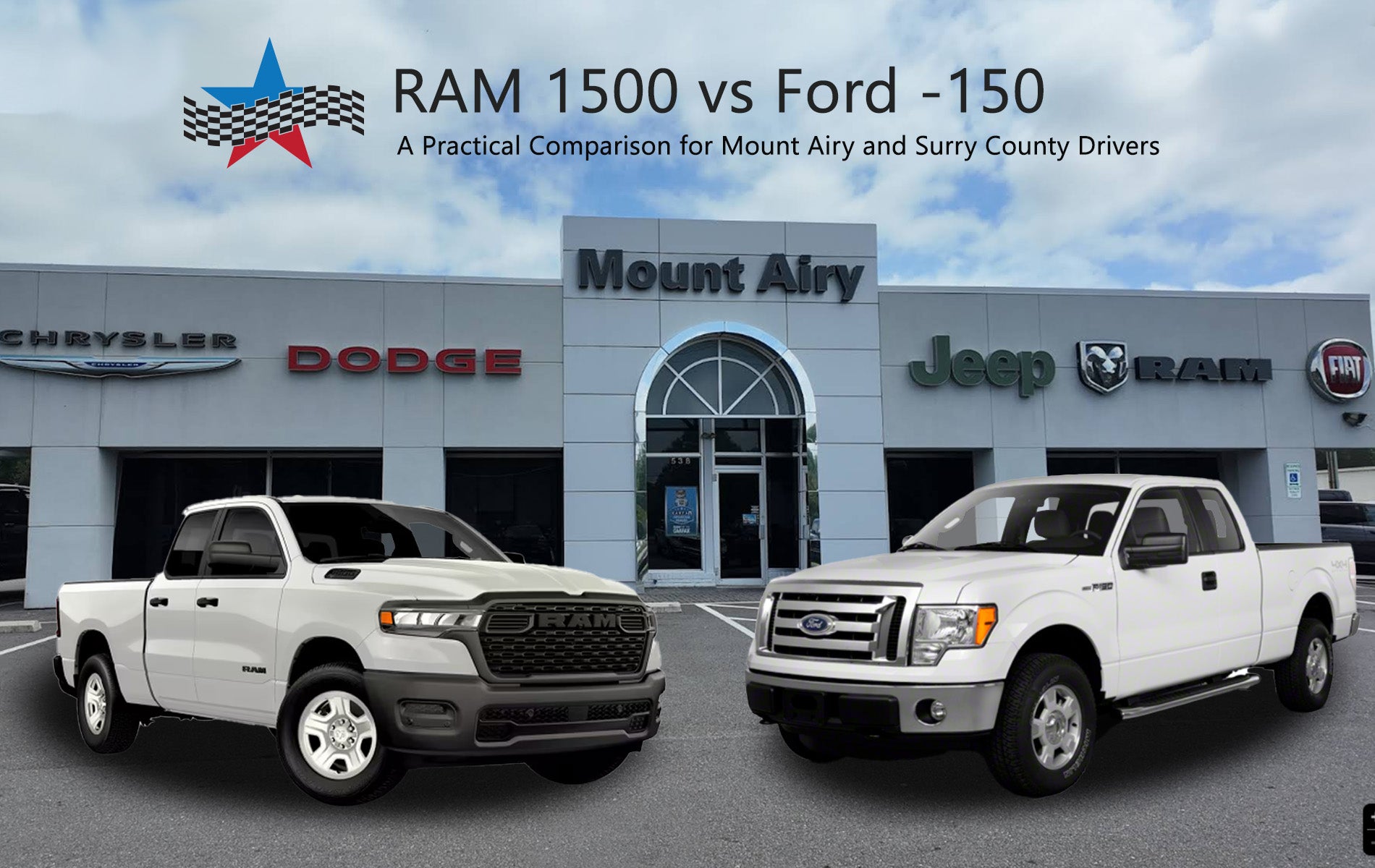
RAM 1500 vs Ford F-150 - A Practical Comparison for Mount Airy and Surry County Drivers

A Practical Comparison for Mount Airy and Surry County Drivers If you’re shopping for a RAM 1500 in Mount Airy, NC or comparing it to a Ford F-150 near Pilot Mountain, Galax, or anywhere in Surry County, you’re looking at two of the most popular full-size trucks in America. Both are capable. Both are widely available. Both have loyal followings. So instead of declaring a winner, let’s focus on what actually matters for drivers in Northwest North Carolina: How the truck fits your daily life. How the trim lineup is structured. And what long-term ownership really looks like. Understanding the RAM Trim Lineup The RAM 1500 offers a wide range of trim levels, giving buyers flexibility to choose a truck that truly fits their needs. That lineup includes: Tradesman Big Horn Laramie Rebel Limited Limited Longhorn Tungsten At first glance, that variety can seem extensive — but each trim serves a clear purpose. Tradesman and Big Horn are work-focused and value-oriented. Laramie adds comfort and upgraded technology. Rebel is built for off-road capability. Limited and Tungsten move into premium, luxury-level territory. Ford’s lineup (XL, XLT, Lariat, King Ranch, Platinum, Limited) is organized differently, with fewer nameplates but more layered packages. The key difference is structure: RAM separates personality more clearly by trim. Ford builds upward by layering packages onto fewer trim names. Once explained in straightforward terms, many Mount Airy buyers find the RAM lineup easier to understand than it first appears. Reliability, Longevity, and Reputation In Northwest North Carolina, trucks aren’t short-term purchases — they’re long-term investments. Recent reliability studies show the RAM 1500 scoring very well in initial quality evaluations, with ratings in the high 80s in some industry assessments. The Ford F-150 has built a strong reputation for longevity, particularly with high-mileage trucks still on the road decades later. That reputation is supported by massive production volume and a broad parts ecosystem. At the same time, RAM trucks have been part of American farms, construction sites, and job sites for generations. The RAM nameplate has been in the market for decades, and today’s models continue that practical, working-truck identity with modern engineering improvements. Across Mount Airy, Cana, Pilot Mountain, and Surry County, you’ll see both brands still running strong well past 150,000 miles. Resale value remains solid for both trucks when properly maintained. For many local buyers, the decision often comes down to which truck feels built for the way they work and live — not just which one has the louder reputation online. RAM has earned a strong following among working-class buyers who value practicality, toughness, and straightforward performance. It’s widely seen as a capable, no-nonsense truck with a more refined ride than many expect. Ford carries enormous brand recognition and one of the largest nationwide service networks. Both have credibility. The choice is about fit. Common Owner Feedback: Where Each Truck Gets Criticized If you spend time on truck forums or owner discussions, you’ll see consistent themes for both brands. Some F-150 owners mention: Transmission tuning concerns in certain model years • Occasional electrical glitches in heavily optioned trims • Interior material durability complaints in lower trims • Higher repair costs on complex turbocharged engines On the other hand, some RAM owners mention: Infotainment issues in older generations Depreciation differences compared to Ford in certain years Fuel economy variations depending on engine choice Neither truck is flawless.  What matters most is which trade-offs align with your priorities and how you plan to use your truck in Mount Airy and the surrounding area. Ride Comfort and Interior Quality This is where many Mount Airy drivers notice a difference. The RAM 1500 uses a rear coil-spring suspension (with available air suspension in some trims), which many drivers describe as smoother during daily driving. If you’re commuting from Mount Airy to Winston-Salem, Driving Highway 52 regularly, Or navigating uneven rural roads around Surry County, that smoother ride can become noticeable over time. The F-150 delivers a solid, capable feel — particularly when loaded or towing — and some drivers prefer its traditional truck character. Interior-wise, many buyers find the RAM 1500 leans slightly more upscale in mid-level trims like Laramie compared to similarly priced F-150 trims. As always, preference matters more than paper specifications. Which Truck Makes More Sense in Mount Airy? Choose the RAM 1500 if: You value ride comfort for daily commuting. You appreciate strong recent reliability scores. You prefer a refined interior feel at comparable price points. You identify with a practical, working-man truck identity backed by decades of presence on American roads. Choose the Ford F-150 if: You prefer Ford’s powertrain lineup. You want access to one of the largest nationwide parts networks. You prefer the traditional F-150 driving feel and long-standing brand familiarity. Most truck buyers in Surry County use their vehicle for commuting, errands, weekend projects, and occasional towing — not daily max-capacity hauling.  In that scenario, comfort, durability, resale stability, and overall driving experience often matter more than headline towing numbers. Final Thought for Local Buyers Both trucks are strong options. The real difference becomes clear when you drive them on the roads you use every week — not just when you read spec sheets. If you’re comparing the RAM 1500 vs Ford F-150 in Mount Airy, NC, we’d be glad to walk you through the trim levels in plain language and help you see how each truck fits your daily routine. Whether you’re coming from Mount Airy, Pilot Mountain, Galax, Cana, or anywhere in Surry County, we can have a RAM 1500 ready for you to experience in person.

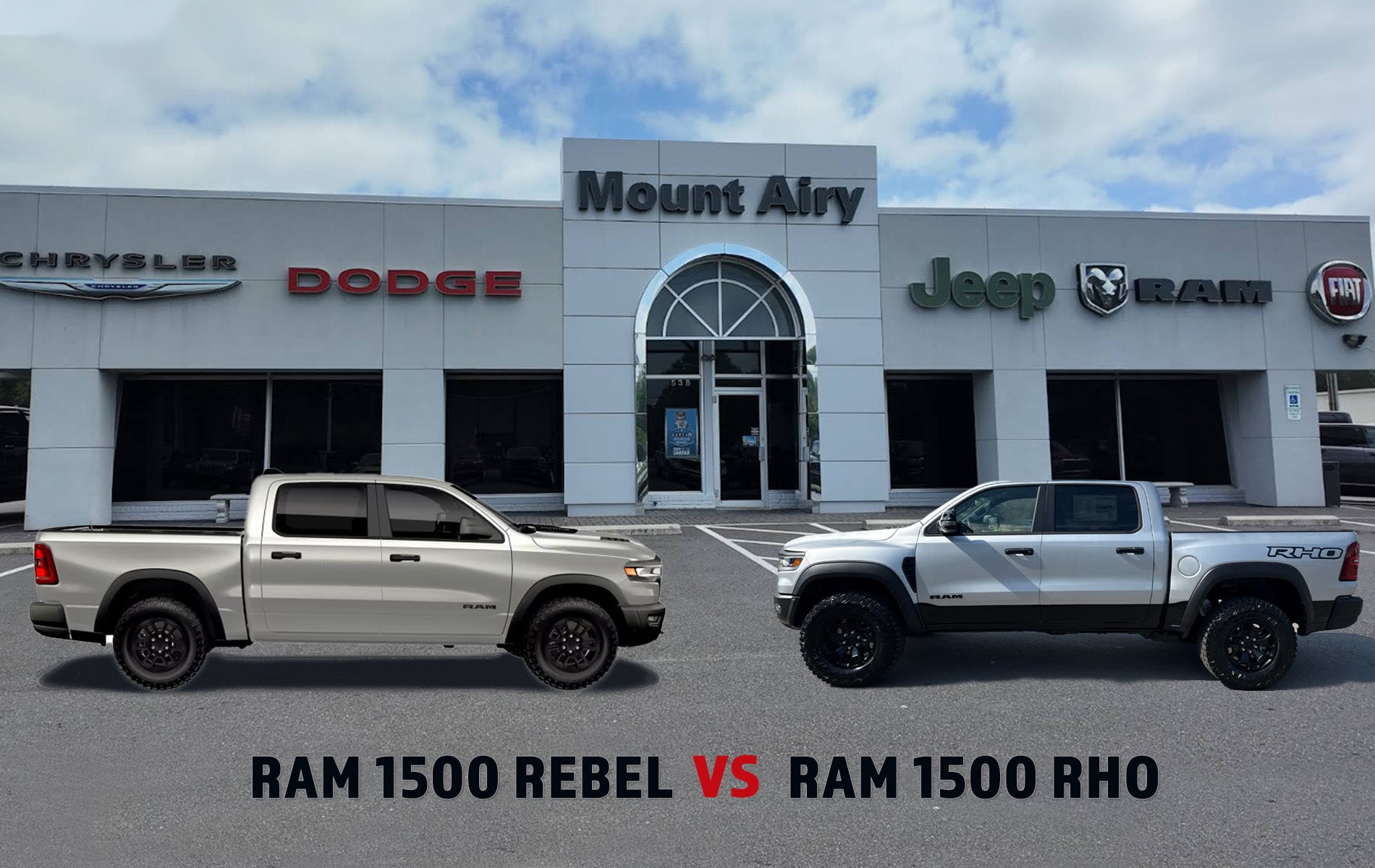
2026 RAM Rebel vs RAM RHO

2026 RAM 1500 RHO vs RAM 1500 Rebel: Which Off-Road RAM Fits Your North Carolina Lifestyle?

The 2026 RAM 1500 Rebel and the 2026 RAM 1500 RHO are both built for outdoor adventure, but they target very different types of truck buyers. The Rebel is designed to balance daily driving with camping trips, towing, mountain travel, and weekend off-roading throughout North Carolina. The RHO takes things much further, combining premium luxury with aggressive off-road capability, advanced suspension technology, and high-speed dirt-road performance. Both trucks can handle muddy backroads, mountain trails, fishing trips, and rough weather with confidence. The real question is whether the RHO’s added performance and technology justify the higher price for the way you actually plan to use your truck. For some buyers, the Rebel will be the smarter all-around adventure vehicle. For others, the RHO delivers a level of capability and refinement that few factory trucks can match. Dirt Road Performance vs Everyday Adventure In North Carolina, most off-road truck owners are not racing across desert dunes. They are driving gravel mountain roads near Boone and Blowing Rock, pulling campers through muddy campground entrances, navigating forest service roads, and heading to fishing spots deep in the Appalachians. That is where the differences between the Rebel and the RHO start to matter. The Rebel is designed to comfortably balance daily driving with weekend outdoor adventure, while the RHO is engineered for more aggressive off-road capability, advanced suspension performance, and premium refinement on rough terrain. Suspension Differences: Bilstein Technology Matters The suspension setup is one of the largest differences between these trucks. The Ram Rebel uses a proven off-road suspension with Bilstein shocks and a factory lift that delivers excellent ride quality on pavement while still handling rough trails comfortably. The RHO takes suspension technology much further. It uses the advanced Bilstein Black Hawk e2 adaptive shock system, which constantly monitors: Steering input Throttle position Terrain conditions Vehicle movement The system automatically adjusts damping in real time to help keep the truck stable, controlled, and comfortable across changing terrain conditions. This gives the RHO an incredibly controlled ride over rough dirt roads, washboard surfaces, and uneven terrain. One of the most surprising things reviewers consistently mention is how refined the RHO still feels on the highway despite its aggressive off-road hardware. Truck Width, Garage Fit, Height Clearance, and Everyday Usability The RHO’s wider stance, 35-inch tires, and aggressive fender flares create incredible road presence, but they can also make: Garage fit tighter Parking decks more stressful Narrow mountain roads trickier Daily maneuvering slightly more challenging The Rebel is still a full-size truck, but its slightly narrower setup and 33-inch tires make it feel more manageable in suburban neighborhoods, older garages, and mountain-town environments. For buyers in North Carolina, garage fit is worth considering before purchase, especially in older homes where garage dimensions may be smaller than modern standards. Measurement Ram Rebel Ram RHO Average 1-Car Garage Average 2-Car Garage Width (Without Mirrors) 82.1 inches 88 inches 144 inches wide 240 inches wide Remaining Width Clearance 61.9 inches 56 inches — — Clearance Per Side 30.95 inches 28 inches — — Approximate Height 77.6 inches 80.9 inches 84-inch garage opening 84-inch garage opening Remaining Height Clearance 6.4 inches 3.1 inches — — Many truck owners online mention that rooftop tents and 35-inch tire setups can quickly create clearance problems with garage doors and parking decks. For buyers planning future camping or overlanding upgrades, the Rebel’s slightly lower stance may offer more flexibility for everyday garage use, while the RHO delivers a much more aggressive appearance and commanding off-road presence. Ground Clearance Differences Ground clearance matters more than many buyers realize, especially on uneven forest roads, muddy campsites, and rocky mountain access trails. Approximate ground clearance: Ram Rebel: 9.7 inches Ram RHO: 11.8 inches The additional clearance on the RHO helps protect the underbody during more aggressive off-road driving and allows the truck to clear obstacles more easily. Still, the Rebel offers more than enough clearance for most camping, fishing, and outdoor travel situations throughout North Carolina and Virginia. Camping Features and Rooftop Tent Compatibility Both trucks can absolutely become excellent camping and overlanding rigs. The Rebel may actually be the easier and more affordable platform for many camping enthusiasts because owners often feel more comfortable modifying it with: Rooftop Tents |  Bed Racks |  Cargo Systems |  Recovery Gear |  Camping Accessories  |  Split Tailgate The RHO can certainly handle rooftop tents and overlanding setups, but many buyers hesitate to heavily modify such an expensive high-performance truck. Because the Rebel sits slightly lower and uses smaller tires, rooftop tent access can also feel a little easier for everyday camping use. Both trucks offer large bed space, power outlets, towing capability, cargo flexibility, and strong aftermarket support for outdoor adventure builds. The Hurricane Twin-Turbo Engine Explained One of the biggest differences between the Rebel and the RHO is the version of Ram’s new Hurricane twin-turbo inline-six engine used in each truck. Feature RAM Rebel RAM RHO Engine 3.0L Hurricane Twin-Turbo Inline-6 High-Output 3.0L Hurricane Twin-Turbo Inline-6 Horsepower 420 HP 540 HP Torque 469 lb-ft 521 lb-ft Driving Characteristics Balanced power for towing, daily driving, and outdoor adventure Extreme acceleration and aggressive off-road performance Power Delivery Smooth low-end turbo torque with strong everyday responsiveness Massive turbocharged torque with high-performance tuning and rapid acceleration Fuel Efficiency Compared to Older V8s Improved efficiency with strong towing capability Better efficiency than previous high-output V8 performance trucks The power delivery in both trucks feels very different from older naturally aspirated V8 trucks. Turbocharged torque arrives quickly and smoothly, making both the Rebel and the RHO feel responsive even at lower RPMs. The Rebel focuses more on balanced everyday usability, while the RHO delivers significantly more aggressive acceleration and high-performance driving characteristics. Interior Comparison: RAM Rebel vs RAM RHO The interior differences between the Rebel and the RHO become much more noticeable once you get inside the truck. While both models offer modern technology, large touchscreens, and premium comfort features, the RHO pushes further into luxury-truck territory with more upscale materials and high-end technology. Feature RAM Rebel RAM RHO Interior Characteristics Rugged, practical, outdoor-focused Premium, high-tech, luxury-oriented 12-Inch Touchscreen Standard or available depending on trim Standard 14.5-Inch Touchscreen Not typically available Available / Often equipped Passenger Interactive Display Not available on most Rebel configurations Available option Massaging Front Seats Not available Available option Leather / Suede Seating Available depending on package Standard or commonly equipped Harman Kardon Premium Audio Available option Available / Frequently equipped Carbon Fiber Interior Accents Not typical Available Advanced Driver Assistance Features Available depending on package More comprehensive package availability Everyday Driving Comfort Excellent balance of comfort and utility Luxury-truck comfort with aggressive off-road capability Rebel Interior with Red Accents RHO Interior Luxury Comfort Seats The Rebel still offers impressive comfort and technology for everyday driving, camping trips, towing, and mountain travel. The RHO simply adds another level of premium materials, advanced technology, and luxury-focused features for buyers wanting a more upscale off-road truck experience. Which Truck Is More Appropriate for North Carolina Mountain Driving? North Carolina mountain driving presents very different challenges than wide-open off-road terrain. Drivers regularly deal with tight winding roads, steep elevation changes, gravel backroads, heavy rain, occasional snow, and narrow campground or trail entrances throughout the Appalachians. These conditions make everyday maneuverability, suspension comfort, traction, and overall truck size especially important when deciding between the Ram Rebel and the more aggressive Ram RHO. For many buyers, the Rebel may feel easier to maneuver every day because it is slightly less aggressive in overall width, tire size, and ride height. The RHO shines on rough dirt roads and uneven terrain where its advanced suspension system can fully show its capabilities. Buyers whose lifestyle includes long mountain drives, towing campers, rough access roads, outdoor recreation, and daily commuting may find the Rebel offers the better overall balance of comfort, practicality, and capability. Buyers looking for maximum off-road performance, premium luxury, aggressive styling, and trophy-truck-inspired characteristics will likely find the RHO far more appealing. Bed Utility and Tailgate Features Both the Ram Rebel and the Ram RHO are designed to handle outdoor gear and active lifestyles, whether you are loading fishing equipment, coolers, camping supplies, mountain bikes, kayaks, or towing accessories. Both trucks come standard with: Bed lighting Trailer towing technology Trailer assistance features Multiple cargo tie-down points Easy-access tailgate functionality Available features on both trucks, depending on configuration and option packages, may include: Power outlets in the bed Adjustable cargo management systems Spray-in bedliners Power tailgate functionality Advanced trailer camera systems Ram’s tailgate design remains one of the most practical in the truck industry, especially for loading heavier outdoor equipment and camping gear. Buyers planning to tow boats, campers, or outdoor trailers will find both trucks highly capable, although the Rebel may appeal more to buyers prioritizing towing balance while the RHO leans further toward premium off-road performance. Recovery Points and Skid Plates Recovery points and skid plates are two of the most important features on a serious off-road truck, especially for drivers exploring mountain roads and remote outdoor areas in North Carolina. Recovery points, often called tow hooks or recovery hooks, provide secure attachment locations for tow straps, winches, or recovery gear if a truck becomes stuck in mud, snow, loose gravel, or uneven terrain. They are especially valuable on steep mountain trails, muddy campground entrances, and rough forest service roads where traction conditions can change quickly. Skid plates are heavy-duty protective panels mounted underneath the truck to help shield critical components like the engine, transmission, fuel tank, and transfer case from rocks, ruts, tree stumps, and rough terrain. In mountain environments with uneven access roads and hidden obstacles, skid plates can help prevent extremely expensive damage underneath the vehicle. Both the Ram Rebel and the Ram RHO come equipped with serious off-road protection. Depending on configuration, buyers may find: Skid plates Tow hooks and recovery points Locking rear differentials Off-road drive modes Upgraded transfer cases The RHO takes things further with more aggressive underbody protection and additional suspension travel designed for higher-speed off-road capability and rough terrain performance. The Rebel remains extremely capable for the type of driving most North Carolina truck owners are realistically doing, including muddy trails, hunting property access roads, mountain travel, snow, and campground or fishing access roads throughout the Appalachian region. Towing Comparison One surprise for many buyers is that the Rebel can actually out-tow the RHO when properly configured. Approximate towing capacity: Rebel: Up to 11,140 lbs RHO: Around 8,360 lbs That matters for buyers towing: Campers Fishing boats Enclosed trailers Side-by-sides Outdoor equipment The RHO prioritizes suspension travel and high-speed off-road performance, while the Rebel retains stronger towing flexibility for many real-world truck owners. Choose the RAM Rebel if you want: Choose the RAM RHO if you want: Everyday practicality Strong towing capability Outdoor adventure versatility Easier mountain driving Better garage friendliness Lower ownership cost Balanced daily comfort A more manageable everyday driving experience Maximum off-road performance Premium luxury features Advanced adaptive suspension Factory 35-inch tires Trophy-truck-inspired characteristics High-speed dirt-road capability A more aggressive off-road appearance One of the most advanced Ram trucks ever built For many North Carolina buyers, the Rebel may ultimately be the smarter all-around adventure truck thanks to its balance of comfort, practicality, towing capability, and everyday usability. However, buyers looking for the ultimate Ram off-road experience will find that the RHO delivers an impressive combination of power, luxury, suspension technology, and aggressive off-road capability that few factory trucks can match.