Mount Airy Chrysler Dodge Jeep Ram FIAT

Blog

The Ripple Effect: UAW, Stellantis, and the Price Impact of Strikes for Car Buyers

What Does the Auto Worker Strike Mean for Consumers?
The United Automobile Workers (UAW) is one of the most influential labor unions in the United States, with a rich history deeply intertwined with the American automotive industry. Below, Mount Airy Chrysler Dodge Jeep Ram Fiat will explain the connection between the UAW and Stellantis Manufacturers Group (i.e., Chrysler, Dodge, Ram etc.) as well as the current UAW strike:
  • How will it impact the overall costs of cars?
  • Will it affect the inventory of vehicles and parts?
  • Should you purchase a new car now or wait until things smooth over?

What Does the Auto Worker Strike Mean for Consumers?

Auto worker strikes have been a recurring theme in the automotive industry for decades, with workers demanding better wages, working conditions, and job security. While these strikes often make headlines for their impact on the industry and its workforce, their consequences extend beyond the factory floor. One significant and often overlooked ripple effect is how these strikes can impact the price of cars for consumers. Here are six factors to be aware of as a car buyer:

1. Disruption of Production

This is perhaps the most immediate and tangible consequences of auto worker strikes. When workers go on strike, factories cease to operate or operate at reduced capacity.   This disruption leads to a shortage of vehicles in the market, resulting in increased demand for the limited supply. Basic economics tells us that prices tend to rise when demand exceeds supply — an especially prominent phenomenon in the automotive industry, where manufacturers often work on tight schedules and just-in-time inventory systems.

2. Delayed Vehicle Deliveries

Auto worker strikes can also cause delayed vehicle deliveries. Halted or slowed-down production lines not only affects the vehicles currently in production but also the production schedule for upcoming models.   As such, customers who had pre-ordered or planned to purchase specific models may have to wait longer to receive their vehicles. Plus, consumers may face increased demand for the available inventory, pushing prices up due to the waiting game.

3. Increased Costs for Automakers

During strikes, automakers often incur additional costs related to the negotiation process and maintaining idle factories. They sometimes have to compensate dealerships for lost revenue and pay the employees who are not involved in the strike.   These increased costs can put pressure on automakers' profit margins, and to offset these expenses, they might resort to raising the prices of their vehicles after production resumes. In other words, consumers end up paying more for their cars.

4. Potential Supply Chain Disruptions

Auto worker strikes can have a cascading effect on the entire supply chain. Many automotive suppliers rely heavily on just-in-time manufacturing processes, meaning they provide parts and components to automakers precisely when they’re needed for production.   Suppliers suffer when factories are idle because their products are not being used. Financial instability, even bankruptcy, can quickly follow for suppliers.   If a key supplier faces financial difficulties or bankruptcy, it can disrupt the supply chain, leading to delays in vehicle production even after the strike is resolved. Automakers may need to find new suppliers, retool their production lines, or make other costly adjustments to keep production on track. All these factors can increase the overall cost of manufacturing and pass on to consumers through higher car prices.

5. Market Uncertainty

Auto worker strikes create an atmosphere of uncertainty in the automotive market. Customers who were planning to buy a vehicle may delay their purchase until the strike is resolved, anticipating potential price increases or delivery delays.   This hesitation can lead to a temporary dip in demand once the strike is over, as consumers wait to see how the market stabilizes. Automakers may respond by offerring incentives or discounts, but these measures are typically short-lived, and prices usually rise again once demand normalizes.

6. Long-Term Impact on Labor Costs

Auto worker strikes are often seen as a short-term disruption, but they can have lasting consequences on labor costs in the industry. Unions negotiating better wages and benefits for their member can result in higher labor costs for automakers.   Nonetheless, automakers must turn a profit, and they may choose to factor some of these increased costs into their prices. Over time, prices tend to rise from the cumulative effect of multiple strikes and labor agreements.

Seize the Opportunity—Buy a Car Now!

In the wake of the UAW strike, potential car buyers are facing a unique and time-sensitive opportunity that could significantly impact their decisions. While strikes are undoubtedly disruptive, they create a set of circumstances that might make this an ideal moment to purchase a car!

Inventory Shortages Loom

The available supply of new cars dwindles as factories remain idle. As discussed, prices tend to rise when demand exceeds supply. So, if you're in the market for a new car, acting now may allow you to secure your dream vehicle at a more reasonable price than if you wait until after the strike.

Price Increases on the Horizon

Auto manufacturers often pass on the higher labor and production costs resulting from strikes to consumers. Car prices could rise across the board when the strike concludes and production resumes. By making your purchase during the strike, you might avoid the impending price hikes and get your new vehicle at a more affordable rate.

Limited-Time Incentives

Car manufacturers and dealerships may offer limited-time incentives and discounts to maintain sales momentum during strikes. These incentives could include special financing rates, cash rebates, or other promotions designed to entice buyers during challenging times. Take advantage of these offers now, and you stand to save money on your new car purchase!

Guaranteed Vehicle Availability

As the strike continues, the availability of specific car models may become increasingly uncertain. Waiting until after the strike may result in limited choices and longer waiting times for the vehicle you want. Buying now ensures that you have a broader selection and a better chance of securing your preferred make and model.

Potential Negotiation Leverage

Dealerships may be more willing to negotiate favorable terms with customers during periods an auto workers' strike. Sales staff might be incentivized to move inventory quickly, which can create an advantageous bargaining position for buyers. Needless to say, this would mean better deals and more favorable financing terms.

Plan for Future Uncertainties

The duration of an auto workers' strike can be unpredictable. By purchasing a car now, you can proactively address your transportation needs and avoid potential complications caused by prolonged inventory shortages or price increases in the future.

A Historical Overview of the UAW

The United Automobile Workers (UAW) is a labor union representing workers in the automotive industry, among others. It was founded in 1935 and is affiliated with the American Federation of Labor and Congress of Industrial Organizations (AFL-CIO). The UAW is known for its long history of collective bargaining and labor activism, aimed at improving the working conditions, wages, and benefits of its members.

Origins and Early History of the UAW

The UAW's origins can be traced back to the Great Depression when workers in the automotive industry faced harsh working conditions, long hours, and meager wages. The early efforts to unionize automobile workers were met with resistance from the industry's powerful and often anti-union leaders. However, the situation changed with the passage of the National Labor Relations Act in 1935, which protected workers' rights to organize and bargain collectively.   The UAW's first major success came in 1937 with the Flint Sit-Down Strike at General Motors. Workers occupied several GM plants, demanding recognition of the UAW and better working conditions. The strike's success led to widespread unionization in the auto industry, and the UAW quickly became a dominant force in the labor movement.

Role and Achievements of the UAW

Over the decades, the UAW has played a pivotal role in improving the lives of automotive workers. Some of its key achievements include:  
  • Higher Wages: Through collective bargaining, the UAW has negotiated higher wages for its members to ensure auto workers receive competitive compensation.
  • Benefits: The UAW has secured comprehensive benefits packages for its members, including healthcare coverage, retirement plans, and paid leave.
  • Job Security: The union has worked to protect the job security of its members, especially during times of economic uncertainty (such as the 2008 financial crisis).
  • Worker Safety: The UAW has advocated for improved worker safety standards, leading to safer working conditions in auto plants.

The UAW and Stellantis Manufacturers Group

Stellantis is a global automotive manufacturer formed in 2021 through the merger of Fiat Chrysler Automobiles (FCA) and Peugeot S.A. (PSA Group). Stellantis operates under various brand names, including Jeep, Chrysler, Dodge, Ram, Fiat, and Peugeot, among others. The UAW has a significant presence in many of the plants and facilities operated by Stellantis in the United States.

Collective Bargaining

One of the primary ways in which the UAW is connected to Stellantis is through collective bargaining agreements. The UAW negotiates these agreements with Stellantis management to determine wages, benefits, working conditions, and other employment-related matters for its members at Stellantis facilities. These negotiations are a crucial part of the relationship between the union and the company, as they directly impact the lives of Stellantis workers.

Labor Disputes

The UAW's relationship with Stellantis has not always been smooth. Over the years, there have been labor disputes, including strikes and contract negotiations that sometimes resulted in work stoppages. These disputes can have significant financial and operational implications for Stellantis because they disrupt production and impact the company's bottom line. On the other hand, the UAW sees these actions as essential for securing better wages and benefits for its members.

Job Security and Plant Closures

Another area where the UAW and Stellantis intersect is in discussions about job security and plant closures. At times, the union has vocally opposed plant closures or workforce reductions by Stellantis and worked to negotiate alternative solutions that would preserve jobs. There’s an ongoing tension between the interests of the company and those of its employees represented by the UAW.

Investment and Future Collaboration

Despite occasional conflicts, both the UAW and Stellantis recognize the importance of working together to ensure the long-term viability of the American automotive industry. This includes discussions about investment in new technologies, electric vehicles, and the future of manufacturing. Collaboration between the two entities is crucial for adapting to industry trends and maintaining competitiveness.

Final Thoughts

Auto worker strikes are complex events with far-reaching consequences. The immediate impact is felt by the workers, automakers, and their suppliers, but consumers are not immune to the effects. Production, deliveries, long-term labor cost implications, and many other factors work together to connect auto worker strikes to car prices.   The current UAW strike presents a unique window of opportunity for prospective car buyers. While they’re undoubtedly challenging for both workers and manufacturers, strikes create circumstances that can work in the consumer’s favor. By taking action now, you can potentially secure the car you want at a lower price, enjoy attractive incentives, and avoid the uncertainty and price hikes likely to follow the strike’s resolution.   It's an ideal moment to go car shopping and reap the benefits of this temporary market condition. Connect with Mount Airy Chrysler Dodge Jeep Ram Fiat today to set up a test drive!      
Recommended Posts

Mount Airy Speed Bump Issues

Those Humps, Those Humps, Those Awful Speeding Humps.

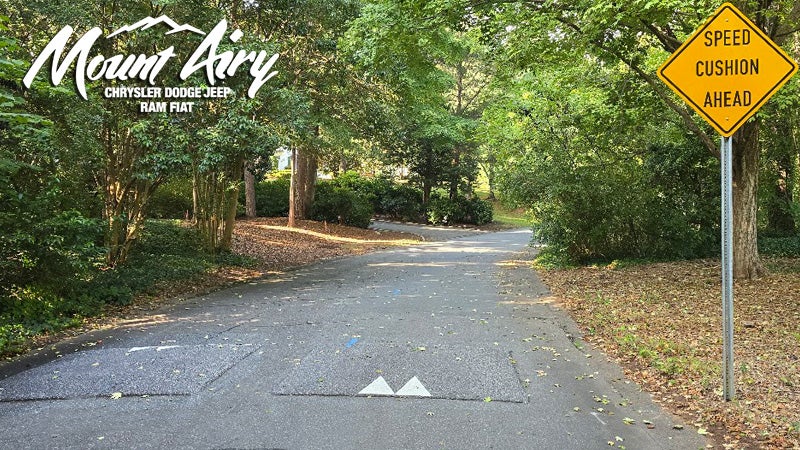
Speed hump etiquette was at the top of our list of annoying driving habits that cause road rage in Mount Airy, NC! Our staff and our customers agree. It's the worst! More importantly, our service team wants drivers to know that incorrectly navigating speed humps can cause some very real car-care issues. You know the drivers we're talking about. There's the guy who doesn't seem to notice the speed hump until the very last second and slams on his brakes. There's the driver who crawls over every little hump at 2 mph while traffic backs up behind them. Then there's the driver in a lifted 4x4, complete with off-road tires and suspension, who approaches a gentle neighborhood speed hump as though they're navigating a boulder field. And, of course, there's the person who simply refuses to participate and drives through the grass, across the shoulder or around the speed hump altogether. Somewhere between the 2-mph crawler and the driver auditioning for the Speed Bump Olympics lies the correct answer. The Speed Hump Offenders We All Know The Panic Braker This is the driver who approaches at normal speed, apparently notices the speed hump approximately 11 feet before impact and SLAMS ON THE BRAKES. Everybody behind them brakes. The front end of the car dives. Then, after all that drama, they creep over the hump. Besides being annoying to the people behind you, there's a mechanical reason this isn't the best approach. Hard braking shifts the vehicle's weight forward and compresses the front suspension. If you're still braking hard when the front wheels encounter the hump, you've already compressed some of the suspension travel that could have helped absorb the impact. Repeated hard braking also creates unnecessary heat and brake wear. The better approach? Reduce your speed gradually before reaching the hump. The Crawler This person encounters a broad, gently sloped speed hump designed to slow traffic and responds as though they're attempting to drive over an uncooked egg. Brake. Three mph. Front wheels over. Pause. Rear wheels over. Accelerate. Repeat 300 feet later. Drivers complain about this one A LOT. One Reddit discussion complained about drivers slowing to around 5 mph for humps intended to be crossed considerably faster. Another asked why drivers practically stop for speed humps designed for traffic moving around 15 mph. And yet another driver complained that people stopping and crawling over newly installed humps were almost more annoying than the speeding traffic the humps were installed to control. Source: Reddit The Pavement Princess This one is particularly entertaining for those of us at Mount Airy Chrysler Dodge Jeep Ram FIAT. It's the lifted 4x4 with giant tires, off-road suspension and enough ground clearance to contemplate the Rubicon Trail......that slows to 2 mph for a suburban speed hump. One Reddit rant was directed at the driver of a lifted Ford F-150 with huge tires and "4x4 OFF ROAD" graphics who crawled across speed humps as though the truck were navigating the Badlands. Source: Reddit We should probably point out that vehicles really are different. A Jeep Wrangler, Ram 1500 Rebel or Ram 2500 Power Wagon is engineered to handle considerably rougher terrain than the average passenger car. Off-road-oriented vehicles may have additional ground clearance, taller tires, greater suspension travel, skid plates and shocks specifically designed for rough terrain. That does NOT mean you should hit a speed bump at 40 mph. It just makes the theatrical 2-mph crossing particularly funny. The Off-Road Detour Guy Why drive over a speed bump when there's perfectly good grass, a shoulder, an empty parking space or some landscaping beside it? One discussion about speed bumps in a Walmart parking lot near Murphy, North Carolina, noted that a surprisingly large percentage of drivers simply drove through empty parking spaces to avoid the bumps.  The Walmart parking area has now become part of the traffic pattern. Source: Reddit Besides being inconsiderate, going around the bump can make your path unpredictable to other drivers and pedestrians. Don't swerve around a speed bump, cross the centerline, drive through parking spaces or put two wheels on the shoulder just to save your suspension from doing its job. The Speed-Bump Olympian Then we have the opposite problem. This driver doesn't slow down at all. Apparently, this behavior is entertaining enough that there is an entire YouTube ecosystem devoted to watching what happens when drivers hit speed bumps too fast. There's even a channel called Speed Bump Olympics dedicated to filming vehicles encountering a notorious set of speed bumps in Fresno, California. Cars, SUVs, vans and trucks bounce, scrape their undercarriages and occasionally get airborne. While entertaining to watch, it's not exactly our recommended technique. First Things First: Is It a Speed Bump or a Speed Hump? We tend to call every raised traffic-control device a "speed bump," but they're actually different. Speed Bump Short and abrupt Often found in parking lots and private drives Generally requires a significant reduction in speed Often crossed at approximately 5 to 10 mph or less, depending on its design and your vehicle Speed Hump Broad and gradual Often several feet long Commonly used on neighborhood and residential streets Frequently designed for vehicles traveling approximately 15 to 25 mph, depending on the particular hump and posted speed Speed Table Longer than a traditional speed hump Has a flat section across the top Often used at pedestrian crossings and on streets where traffic needs to slow without nearly stopping Many can be crossed comfortably at approximately 15 to 25 mph or more, depending on their design and posted speed The important part is this: Not every lump in the road requires the same response. A short, abrupt parking-lot speed bump and a long, gently sloped speed table are completely different obstacles. Pay attention to the design, road markings and posted or advisory speed rather than automatically slamming on your brakes every time you see something raised in the pavement. Can Hitting Speed Bumps Incorrectly Damage Your Vehicle? Yes. Your suspension is designed to absorb bumps, dips and imperfections in the road. That doesn't mean every vehicle can absorb every obstacle at every speed. Shocks, Struts and Suspension Components This is the obvious one. Your suspension absorbs vertical movement between the wheels and the vehicle. Hit an abrupt bump too quickly and you can force suspension components through an extremely rapid compression and rebound. Repeated abuse can contribute to premature wear of shocks, struts, bushings and other suspension components. Wheel Alignment and Steering Hit a significant bump hard enough and you can knock your wheel alignment out of specification. If you notice your vehicle pulling to one side, an off-center steering wheel or unusual tire wear after a particularly nasty encounter with a speed bump, pothole or curb, your alignment may be worth checking. Tires and Wheels A hard vertical impact can also damage a tire or wheel, particularly if your tires are underinflated or your vehicle has low-profile tires with less sidewall available to absorb the impact. The Undercarriage This is especially important for sports cars, lowered vehicles and anything with limited ground clearance. Potential victims include: Front bumpers and splitters Exhaust components Underbody panels Aerodynamic panels Other low-mounted components If your vehicle sits low, slowing down for an abrupt speed bump isn't being overly cautious. It's protecting the bottom of your car. Your Brakes The speed hump itself isn't damaging your brakes. Your driving habits might be. The driver who accelerates to 30 mph between every speed hump and then brakes aggressively to 5 mph is converting that extra speed into heat and brake wear over and over again. If you're traveling through an area with multiple speed humps, maintaining a reasonable, consistent speed is easier on your brakes, easier on your vehicle and considerably less annoying to everyone behind you. But My Jeep or Ram Is MADE for Bumps! Well...sort of. Vehicle design absolutely matters. A low sports car with stiff suspension, low-profile tires and limited ground clearance needs more caution than an off-road-oriented truck or SUV with taller tires, additional suspension travel, greater ground clearance and underbody protection. Many Jeep and Ram models are specifically engineered for rough terrain. Depending on the model and package, that can include: Increased ground clearance Off-road suspension Performance shocks All-terrain tires Skid plates Greater suspension travel But there's an important distinction. Off-road capable does not mean speed-bump invincible. Even a capable truck or SUV can bottom its suspension, unload its tires or come crashing back onto the pavement if it hits an abrupt obstacle at excessive speed. Your suspension may be tough. Your coffee in the cupholder is not. So, What IS the Right Way to Go Over a Speed Hump? It's really pretty simple. Look ahead. Seeing the hump early eliminates the entire Panic Braker problem. Figure out what you're dealing with. Is it a short, abrupt speed bump, a broad speed hump or a long speed table? Pay attention to signs and road markings. Reduce your speed early and gradually. Do your braking before you reach the hump rather than slamming on your brakes at the last second. Ease off heavy braking before your front wheels climb the hump. Hard braking transfers weight forward and compresses the front suspension. Slow down first, then let the suspension do its job. Cross the hump straight and smoothly. Don't suddenly swerve, straddle it, invade the other lane or take a scenic tour through somebody's landscaping. Let the rear wheels clear the hump before accelerating normally. Adjust for your vehicle. A low sports car, minivan, Jeep Wrangler and Ram 2500 aren't going to cross every obstacle comfortably at precisely the same speed. Ground clearance, wheelbase, tire profile, suspension design and vehicle load all matter. Remember there's probably somebody behind you. Slow down appropriately, but don't turn every gentle neighborhood speed hump into a complete traffic stop when conditions and the design of the hump don't require it. Don't Be THAT Driver Speed humps exist because somebody, somewhere, was driving too fast. Ironically, they can create an entirely new collection of irritating driving habits. There's no prize for crossing one at 2 mph, and there's definitely no prize for launching your vehicle over one at 40. The goal isn't to see how slowly or how quickly you can get over the hump. Slow down early. Choose a speed appropriate for the type of hump and your vehicle. Cross it smoothly. Then keep moving. Your brakes will appreciate it.

Know Your Rights with a Jeep Warranty Company

Jeep Warranties Explained

Jeep Warranties Explained: What North Carolina Jeep Owners Should Know Before Buying Additional Coverage Buying a Jeep comes with a factory warranty, but that does not necessarily answer the questions most owners have about protecting their vehicle long term. Should you buy additional coverage when you purchase the Jeep? Can you wait? What exactly does a powertrain warranty cover? Is a plan sold at a Jeep dealership automatically a Jeep-backed plan? And what happens if you buy a used or Certified Pre-Owned Jeep? Those questions become especially important as vehicles become more technologically complex and repairs become more expensive. We researched the questions Jeep owners are asking online and then took them to Jessica Manuel, Head Service Manager at Mount Airy Chrysler Dodge Jeep Ram FIAT, and Sales Manager, Payton Williamson for the perspective from professionals who actually see warranty repairs, service contracts and repair bills at the dealership. Their answers included a few things Jeep owners may not know. First: What Warranty Comes With a New Jeep? What Does the Factory Warranty on a New Jeep Cover? Every new Jeep comes with factory warranty protection included with the vehicle. The coverage is divided into several different warranties, with each protecting a different part of the vehicle. Basic Limited Warranty ("Bumper-to-Bumper") The Basic Limited Warranty covers the cost of parts and labor to repair almost every component of the Jeep if it fails because of a factory defect in materials or workmanship. This includes components ranging from the body and mechanical systems to the vehicle's computerized screens, sensors and electronics. That electronics coverage has become particularly important as Jeeps and other new vehicles have become increasingly dependent on computers and sophisticated technology. Mount Airy CDJRF Service Manager Payton Williamson says today's vehicles are dramatically different from the cars dealerships were servicing 15 years ago. "As expensive as everything is to fix today, the last thing you want to do is come out of pocket for electronics. It's not like it used to be 15 years ago, where you just had a little CD player." Payton also confirmed that the factory's Basic Limited Warranty, commonly referred to by customers as "bumper-to-bumper," is the coverage that protects those electronics. "Your comprehensive warranty, the limited comprehensive, which is what people call bumper-to-bumper...that's what's gonna cover your electronics. That is one of the most important warranties to have in today's world, because these cars are so full of computers. It's not just a little radio anymore." That distinction becomes important when the Basic Limited Warranty expires. A Jeep may still have powertrain protection remaining, but that does not mean all of its computers, screens, sensors and other electronics remain covered. Powertrain Limited Warranty The Powertrain Limited Warranty is much narrower. It protects the major mechanical components responsible for creating power and transferring it to the wheels, including covered components of the engine, transmission, drive system and 4x4 or all-wheel-drive system. This is different from bumper-to-bumper coverage. Powertrain protection is designed primarily for the Jeep's major mechanical "powerhouse" components rather than all of the electronics and other systems throughout the vehicle. Anti-Corrosion Warranty Jeep's Anti-Corrosion Warranty covers qualifying sheet-metal panels that rust completely through from the inside out, sometimes referred to as perforation. It is not intended to cover ordinary cosmetic surface rust caused by things such as paint chips, scratches, road salt or other external damage. Roadside Assistance Jeep Roadside Assistance provides 24/7 help for certain roadside emergencies, including towing to the nearest Jeep dealership, flat-tire assistance, battery jump-starts, vehicle lockouts and emergency fuel delivery. High-Voltage Battery Warranty for Jeep 4xe Models Jeep 4xe plug-in hybrid models also have separate warranty protection for the vehicle's high-voltage hybrid battery pack and related hybrid electronic components. This coverage is particularly important to distinguish from the ordinary Powertrain Limited Warranty. The specialized high-voltage components of a Jeep 4xe should not simply be assumed to fall under the same powertrain coverage that applies to the engine, transmission and conventional drivetrain. Is Additional Warranty Coverage Worth It on a New Jeep? There isn't one answer that is right for every Jeep owner. The value depends on the vehicle, how long you intend to own it, the coverage being offered, its cost and your comfort with paying for an unexpected repair. Mount Airy CDJRF Sales Manager Payton Williamson admits that he didn't always see the value in purchasing additional warranty coverage. Years ago, when he started out selling cars, he understood why customers might be skeptical about extended protection plans. "Years ago when I was selling cars, in your mind you're thinking that's kind of like a scam. That's how you think," Payton said. His perspective changed after moving into the service side of the dealership and seeing what today's repairs actually cost, particularly when expensive electronics are involved. "As expensive as everything is to fix today, the last thing you want to do is come out of pocket for electronics," he said. "It's not like it used to be 15 years ago, where you just had a little CD player." After watching customers face those repair bills, Payton says he now strongly favors additional coverage. "I've seen so many cars come through that, when you see the looks on people's faces...it makes you think a lot more." That doesn't mean every Jeep owner should automatically purchase every protection product offered. It does explain why someone who sees repair bills every day may evaluate the value of coverage differently than someone sitting in the finance office buying a vehicle. Do You Have to Buy a Jeep Protection Plan When You Buy the Jeep? No. Jessica Manuel, Head Service Manager emphasized one point that many buyers misunderstand: "It doesn't have to be at purchase. You can buy protection plans at any time." But "any time" requires an important qualification. The type of coverage available to you can change as the Jeep gets older and accumulates mileage. A high-mileage vehicle, for example, may need to qualify for a different type of plan than a nearly new Jeep. There is also an important distinction between factory-backed FlexCare coverage and an aftermarket service contract. Those products don't necessarily follow the same eligibility, start-date or mileage rules. What Is FlexCare? Is It the Same as Mopar Vehicle Protection? Jeep's factory-backed vehicle protection program is now called FlexCare. The FlexCare name replaced Mopar Vehicle Protection in January 2025. That change is recent enough that consumers may still encounter both names when researching coverage, and even experienced dealership employees may still be adjusting to the new terminology and program details. Jessica and Payton were very candid about this during our interview. When specifically asked about some of the newer FlexCare rules, both indicated their teams were still training on the updates. That is actually an important lesson for consumers: don't rely solely on the words someone uses to describe a protection plan. Ask to see the actual contract and identify the company backing it. Can You Buy FlexCare After You Purchase a New Jeep? For eligible vehicles, FlexCare can generally be purchased after the original vehicle purchase. Current FlexCare information indicates that new-vehicle plans may generally be purchased within three years or 36,000 miles of the vehicle's warranty start date, whichever occurs first. There is another reason not to assume that waiting costs nothing: a surcharge may apply after the first one year or 12,000 miles. The exact eligibility and price depend on the Jeep and the coverage being purchased, so this is one situation where getting a VIN-specific quote is much more useful than relying on a generic online price. If I Wait Two Years to Buy FlexCare, Do I Get Two Extra Years at the End? Not necessarily. This is one of the easiest warranty concepts to misunderstand. For new-vehicle FlexCare coverage, the plan term is generally measured from the Jeep's original warranty start date and zero miles, rather than simply adding the entire advertised term to the date you purchase the plan. For example, purchasing a five-year plan after you've already owned the Jeep for a year generally does not mean that you have just purchased five additional years beginning that day. Traditional pre-owned or third-party coverage can work differently. Jessica explained that the aftermarket coverage sold by Mount Airy CDJRF generally starts based on the terms of that particular contract rather than automatically following the factory plan's original in-service-date calculation. That is why shoppers comparing two "seven-year warranties" may actually be comparing two very different periods of protection. What Does "Powertrain Warranty" Actually Cover? "Powertrain" is one of the most frequently used—and frequently misunderstood—terms in automotive warranties. Jessica gave us a much simpler way to think about it: "Powertrain warranty will cover your internally lubricated components of your engine, transmission, and drivetrain." That generally includes major internal components associated with the: Engine Transmission Transfer case Differentials Axles and covered drivetrain components But Jessica stressed what powertrain doesn't mean. "It does not cover any type of bolt-ons, electrical, any type of stuff of that sort. It is only internally lubricated." What is a "bolt-on"? "An alternator's bolted on," she explained. "Starters, stuff of that sort." And even within a four-wheel-drive system, the answer isn't automatically "everything." When asked whether 4WD components would be covered, Jessica explained that some may be and some may not. That is an important distinction for Jeep owners. A vehicle can have a long powertrain warranty and still contain a substantial number of expensive components that aren't included in that particular warranty. Are Electronics Covered by the Powertrain Warranty? Generally, no. And this is precisely why Payton considers broader coverage increasingly important. Modern Jeeps contain considerably more electronic equipment than vehicles did 15 or 20 years ago. Infotainment systems, cameras, modules, sensors and other electronic components can be expensive to diagnose and replace. A long powertrain warranty sounds reassuring, but it should not be confused with comprehensive mechanical and electronic coverage. When comparing plans, ask specifically what happens when an electronic component fails. What About the Jeep Wrangler 4xe? Hybrid components should not simply be assumed to fall under ordinary powertrain coverage. When asked specifically whether hybrid components on a Jeep 4xe would be included in the conventional powertrain definition she had just described, Jessica said no. The 4xe has its own hybrid-system components and applicable warranty provisions. Owners should have the dealership check the VIN and identify which factory warranty applies to the component in question rather than assuming "powertrain" covers the entire hybrid propulsion system. Can You Buy Coverage for a Certified Pre-Owned Jeep? Potentially, yes. A Jeep Certified Pre-Owned vehicle already includes warranty benefits, which is one of the reasons buyers choose CPO vehicles in the first place. Current Jeep CPO information describes benefits that can include a 125-point inspection, 7-year/100,000-mile Powertrain Limited Warranty, 3-month/3,000-mile Maximum Care coverage and roadside assistance, subject to the particular vehicle and program terms. But those numbers can create another misunderstanding. The existence of CPO powertrain coverage doesn't necessarily mean that everything a customer might want covered is protected for seven years. Jessica pointed specifically to the short comprehensive portion: "Certified is three months, 3,000 miles, if I'm not mistaken, and outside of that, coverage would be gone." Her conclusion was straightforward: "So it would definitely be a good idea to have coverage once that has run out." For an eligible CPO Jeep, additional coverage may therefore be less about duplicating the included powertrain protection and more about expanding the components covered or protecting the vehicle after shorter CPO benefits expire. Can a Regular Used Jeep Get a Warranty or Service Contract? Yes, depending on the Jeep and the product. Traditional pre-owned protection plans are available for many used vehicles. Eligibility can depend on factors such as age, mileage, condition and modifications. This is particularly relevant to Jeep owners because Wranglers and other Jeeps are frequently modified. Jessica specifically recommends disclosing modifications when asking about coverage. "If you have a Wrangler and it is upfitted, it's got a lift, wheels, tires, etc., it is a good idea to talk to the warranty or finance company...to make sure they know your vehicle is equipped with aftermarket add-ons." In other words, don't wait until something breaks to find out how your lift kit, oversized tires or other modifications affect the contract. Ask about modifications before purchasing the coverage. Jessica also pointed out another detail that used-vehicle buyers can easily overlook: purchasing a service contract doesn't necessarily mean every contract provides coverage immediately. Pro Tip: If you are buying coverage for a used jeep be certain to ask when the coverage actually begins. "You always want to ask the warranty company if there's a grace period," Jessica said, explaining that some contracts may require the owner to drive the vehicle for a certain number of miles or own it for a certain number of days before coverage takes effect. "Some warranties do that, some do not," she said. "But if you do get a warranty, you always want to make sure to ask that question." For someone buying a used Jeep, that's an important detail to know before signing the contract. Ask exactly when the coverage becomes effective and whether there is a waiting period based on time, mileage or both. Does Mount Airy CDJRF Sell Third-Party Vehicle Service Contracts? Yes. Jessica confirmed that Mount Airy CDJRF offers aftermarket coverage through JM&A/Fidelity, explaining that the dealership encounters the coverage under both names. This is also an important example of why the generic word "warranty" can be confusing. A Jeep owner may encounter: The original Jeep factory warranty included with the vehicle Factory-backed FlexCare protection purchased separately Certified Pre-Owned warranty coverage A third-party vehicle service contract Other maintenance, service agreements, or protection products Those aren't automatically interchangeable. The most important question isn't simply, "Is this an extended warranty?" Ask: "Who is actually backing and administering this contract?" If a Jeep Dealer Sells It, Does That Mean It Is a Jeep Factory Plan? No. A product being sold inside an authorized Jeep dealership does not by itself make that product FlexCare. Dealerships may offer factory-backed products, third-party vehicle service contracts or both. Before buying, look at the actual paperwork and identify the: Plan name Issuing company Administrator or obligor Term Mileage limit Deductible Covered components Exclusions Approved repair facilities Claims procedure Cancellation provisions If someone describes the product as "Mopar," "FlexCare," "factory-backed" or simply an "extended warranty," the written contract should tell you exactly what you're purchasing. Can Different Jeep Dealers Charge Different Prices for Similar Coverage? Yes, pricing can vary. The price of protection coverage can depend on the vehicle, mileage, plan level, deductible, term and other eligibility factors. Dealership pricing can also vary. That makes comparing the words "seven-year warranty" or "Maximum Care" alone insufficient. To compare two quotes fairly, make sure you're comparing the same provider, same coverage level, same term, same mileage limit and same deductible. A lower quote isn't necessarily the same product. How Can I Check the Warranty Coverage on My Jeep? If you're trying to determine what warranty coverage a particular Jeep still has, the VIN is the place to start. A dealership can use the Vehicle Identification Number to identify the specific vehicle and research its warranty information. It is especially useful when you're buying a used Jeep and may not know its complete warranty history or which factory coverage may still be in effect. The VIN can also be important when researching additional protection because eligibility and available coverage can depend on the specific vehicle and its warranty status. But if you're checking the VIN on a used Jeep, make sure you're looking at the right one. Pro Tip: Always go by the VIN on the windshield! Mount Airy CDJRF Head Service Manager Jessica Manuel has a simple rule: "I always try to go by the VIN on the windshield." Why the windshield instead of the VIN sticker inside the driver's door? "Some older models have been wrecked and they replaced the door," Jessica explained. "A lot of times, that VIN sticker has not been peeled off, so it has the VIN from an old vehicle on it." In other words, a replacement door can potentially bring another vehicle's VIN sticker with it. The VIN visible through the windshield identifies the Jeep itself rather than a removable body component that may have been replaced during the vehicle's life. So, whether you're asking a dealership to check existing warranty coverage, researching protection-plan eligibility or looking into the history of a used Jeep, Jessica recommends starting with the VIN displayed at the windshield. The Bottom Line: Don't Buy a "Warranty." Buy Coverage You Understand. Perhaps the most important lesson from talking with the Mount Airy CDJRF service department is that the word warranty by itself doesn't tell you very much. A factory warranty, powertrain warranty, FlexCare plan, CPO warranty and third-party vehicle service contract can have very different rules. Before purchasing additional coverage for a Jeep, ask these questions: Who backs and administers the coverage? Is it factory-backed FlexCare or a third-party contract? Exactly which components are covered? When does coverage begin? When does it end? What is the mileage limit? Is there a waiting or grace period? What is the deductible? Where can covered repairs be performed? Are modifications to the Jeep relevant to coverage? Is any of the protection duplicating coverage the Jeep already has? And don't be afraid to ask the dealership to look at the actual VIN before answering. For Jessica Manuel and Payton Williamson, those aren't theoretical questions. They see what happens after the sale—when a warning light comes on, an infotainment system fails or a customer discovers what his or her contract actually covers. As Payton put it, you can sometimes tell who has coverage simply by walking through the service waiting room. For Jeep owners, the better time to understand that coverage is before you're sitting there waiting for the repair estimate.

Chrysler Dodge Jeep Ram FIAT Fuel Guide

Know Your Fuel Options: Get the Most Out of Your Chrysler, Dodge, Jeep Ram & Fiat

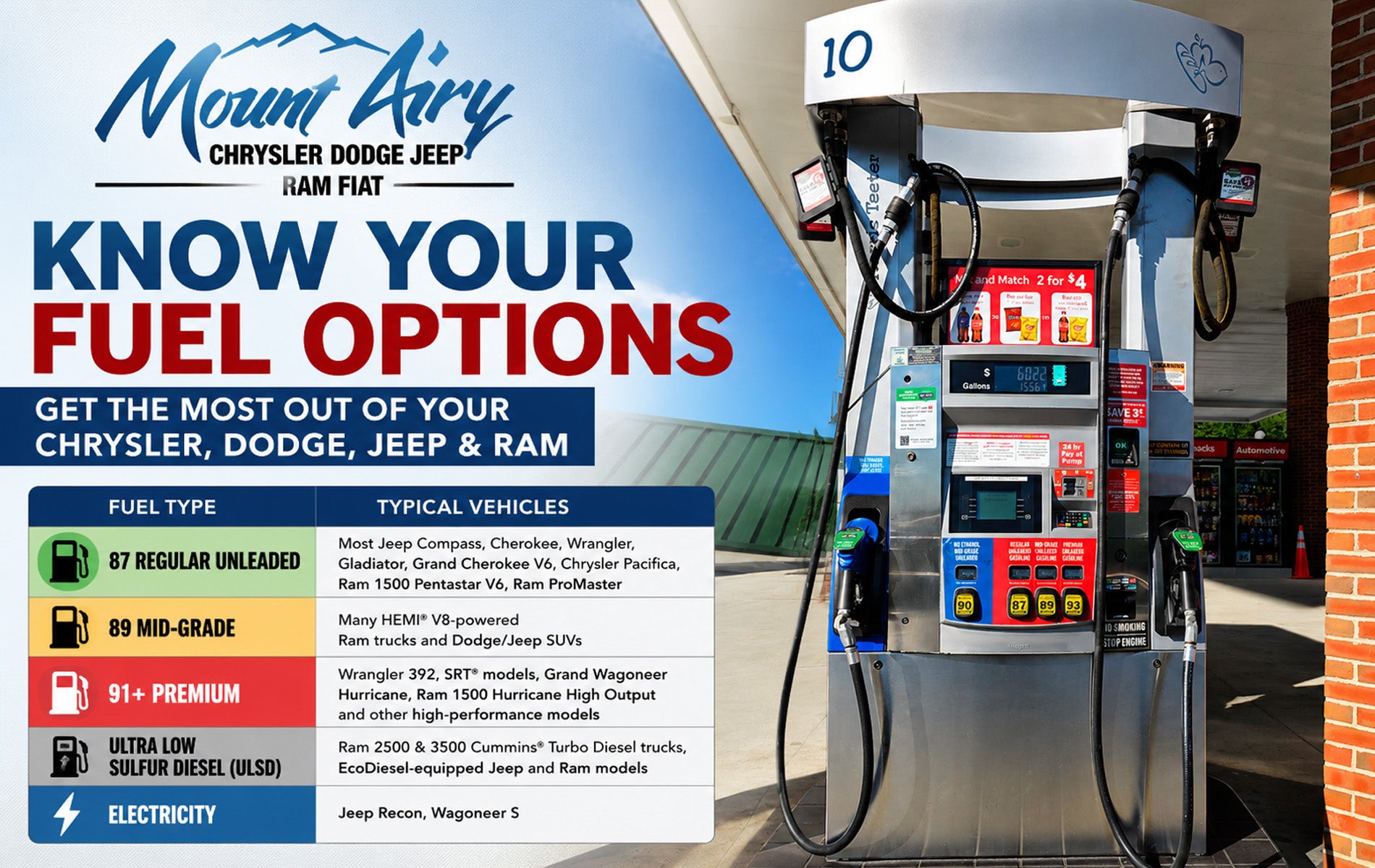
If you've ever had someone swear by premium fuel, or have a vehicle enthusiast in the family, you've probably had a debate or two at the gas pump. Some people believe premium gasoline is always better. Others won't spend a penny more than they have to. So, who's right? The answer is... both. Unlike many manufacturers that recommend the same fuel for nearly every vehicle, the Chrysler, Dodge, Jeep, Ram and FIAT family includes everything from fuel-efficient commuter vehicles and work trucks to high-performance muscle cars, luxury SUVs, diesel trucks and fully electric vehicles. That means the right fuel depends on what you're driving. The good news is that choosing the correct fuel isn't nearly as complicated as it looks when you're standing at the pump. The Best Fuel Isn't Always the Cheapest... or the Most Expensive One of the biggest misconceptions in the automotive world is that premium gasoline is simply "better" gasoline.  It isn't. Premium fuel isn't cleaner. It doesn't contain more energy. It doesn't automatically make your engine last longer. Instead, the best fuel is the fuel your vehicle's engineers designed it to use. Putting premium gasoline in a Jeep Compass usually won't make it perform any better. On the other hand, putting regular gasoline into a Wrangler 392 or another high-performance engine isn't doing it any favors.  Think of fuel like prescription medicine. The correct prescription works best. Taking more doesn't necessarily improve the results. A Simple Guide to Fuel Recommendations Fortunately, choosing the correct fuel doesn't have to be confusing. Fuel Type Typical Chrysler, Dodge, Jeep, Ram, Fiat Vehicles 87 Regular Unleaded Most Jeep Compass, Cherokee, Wrangler, Gladiator, Grand Cherokee V6, Chrysler Pacifica, Ram 1500 Pentastar V6, Ram ProMaster, FIAT 500L 89 Mid-Grade Many HEMI® V8-powered Ram trucks and Dodge/Jeep SUVs 91+Premium Wrangler 392, SRT® models, Grand Wagoneer Hurricane, Ram 1500 Hurricane High Output, FIAT 500X, FIAT 500 Abarth, FIAT 124 Spider Ultra Low Sulfur Diesel (ULSD) Ram 2500 & 3500 Cummins® Turbo Diesel trucks, EcoDiesel-equipped Jeep and Ram model s Electricity Jeep Recon, Wagoneer S, FIAT 500e Important: Always check your owner's manual and the label inside your fuel door for your specific vehicle. Different engines and trim levels can have different fuel recommendations. Why Do Some Vehicles Need Premium Fuel? This is where many people get confused.  Premium gasoline isn't designed to make an engine more powerful.  Instead, it helps prevent engine knock in engines that produce very high cylinder pressures. For example, a Jeep Compass develops around 200 horsepower and is engineered to run efficiently on regular 87-octane gasoline.  Compare that to a Wrangler 392 with its legendary 6.4-liter HEMI V8 producing approximately 470 horsepower, or the new Grand Wagoneer equipped with Stellantis' twin-turbo Hurricane engine producing well over 500 horsepower.  Those engines generate dramatically higher combustion pressures, requiring gasoline with greater resistance to premature combustion. That's exactly what premium fuel provides. Premium gasoline isn't a luxury.  It's simply the correct fuel for certain high-performance engines. What Is Octane? Octane is one of the most misunderstood words you'll see at the gas station.  Here's the simple explanation: Octane measures a gasoline's resistance to premature combustion inside the engine. Higher octane does not mean: More horsepower Better quality gasoline Cleaner fuel Longer engine life It simply means the fuel is better suited for engines designed to operate under higher pressures.  That's why so many Chrysler, Dodge, Jeep and Ram vehicles are perfectly happy using regular gasoline, while certain HEMI®, Hurricane and SRT® engines are engineered for premium fuel. What About Mid-Grade Gasoline? Many HEMI-powered trucks and SUVs recommend 89-octane mid-grade gasoline. Can they operate on 87?  In many situations, yes.  Modern engine computers can adjust ignition timing to compensate for lower octane.  However, using the recommended 89-octane fuel allows the engine to perform as its engineers intended, especially while towing, climbing mountains or accelerating under heavy loads. If your owner's manual recommends 89 octane, that's still the best choice. Diesel Is a Completely Different Fuel Ram's legendary Cummins® Turbo Diesel trucks don't use gasoline at all.  They require Ultra Low Sulfur Diesel (ULSD). Diesel engines ignite fuel differently than gasoline engines.  Gasoline engines use spark plugs.  Diesel engines ignite fuel through extremely high compression.  Because of this completely different design, gasoline should never be pumped into a diesel vehicle, and diesel should never be pumped into a gasoline-powered vehicle. What Happens If You Accidentally Put Diesel Into a Gasoline Vehicle? It happens more often than you might think. If you accidentally pump diesel into your gasoline-powered vehicle: Don't start the engine. If the mistake is caught before starting the vehicle, repairs are often limited to draining the fuel tank and flushing the fuel system. Once the engine has been started, diesel fuel can circulate through the injectors, fuel lines and spark plugs, increasing the cost of repairs. The sooner the mistake is discovered, the better. What About FIAT Vehicles? Although FIAT models make up a smaller portion of our inventory, they follow exactly the same rule as every other vehicle we sell.  Use the fuel recommended by the manufacturer. Some FIAT models, including the FIAT 500X, FIAT 500 Abarth and FIAT 124 Spider, feature turbocharged performance engines that recommend premium gasoline to deliver their intended performance.  Others, like the FIAT 500L, are engineered to operate on regular 87-octane gasoline.  The all-electric FIAT 500e doesn't visit the gas station at all. Once again, the best fuel isn't the most expensive fuel—it's simply the fuel your vehicle was designed to use. Buying a Used Vehicle? Don't Guess. One advantage of shopping at Mount Airy Chrysler Dodge Jeep Ram FIAT is the variety of vehicles we offer. That also means fuel recommendations can vary significantly from one vehicle to another. For example: A used Jeep Grand Cherokee with the Pentastar V6 uses different fuel than a Grand Cherokee SRT. One Dodge Charger may be perfectly happy on regular gasoline, while another equipped with a high-performance engine recommends premium. One Ram 1500 may use regular gasoline, while another with the new Hurricane High Output engine performs best on premium. A used FIAT 500L and a FIAT 500 Abarth have different fuel recommendations, even though they're both FIAT vehicles. Don't assume every vehicle from the same manufacturer uses the same fuel.  When in doubt, check the owner's manual, look inside the fuel door or ask one of our product specialists.  We're always happy to help. Fuel Quality Matters, Too Regardless of the octane rating, we recommend purchasing fuel from reputable stations that sell Top Tier™ Detergent Gasoline whenever possible.  Top Tier gasoline contains enhanced detergent additives that help reduce deposits on fuel injectors, intake valves and combustion chambers, helping modern engines stay cleaner over time.  It's one of the easiest ways to help protect your investment. In Summary ... Many Chrysler, Dodge, Jeep, Ram and FIAT vehicles are engineered to run perfectly on regular 87-octane gasoline. Some HEMI-powered vehicles perform best on 89-octane mid-grade. High-performance vehicles like the Wrangler 392, SRT models, Grand Wagoneer Hurricane, certain Hurricane-powered Ram trucks and several FIAT performance models are designed for premium gasoline. Diesel trucks require Ultra Low Sulfur Diesel. Electric vehicles don't require gasoline at all. The important thing isn't buying the most expensive fuel. It's buying the right fuel for the vehicle you're driving.  If you're ever unsure, stop by Mount Airy Chrysler Dodge Jeep Ram FIAT. Our team will gladly help you identify the correct fuel for your vehicle, explain why it's recommended and answer any questions you may have.  Because getting the most out of your vehicle starts with putting the right fuel in the tank.