Mount Airy Chrysler Dodge Jeep Ram FIAT

Blog / News

Blog

All News New Inventory Jeep RAM Trucks Dodge Chrysler Service About Mount Airy CDJRF Pre-Owned Inventory Electric Vehicles Fiat Mount Airy Chrysler Dodge Jeep Ram FIAT Service Mount Airy Chrysler Dealer Used Cars Safety Trade In Community Events Finance Hybrid Jeep Compass Jeep Wagoneer Jeep Wrangler New Technology Accessories Jeep Gladiator Jeep Grand Cherokee People Christmas Year End Sales Minivans Mount Airy Used Cars Black Friday Commercial Trucks & Vans Jeep Trim Levels Mount Airy Chrysler Service
Should you buy a car at the end of the month?

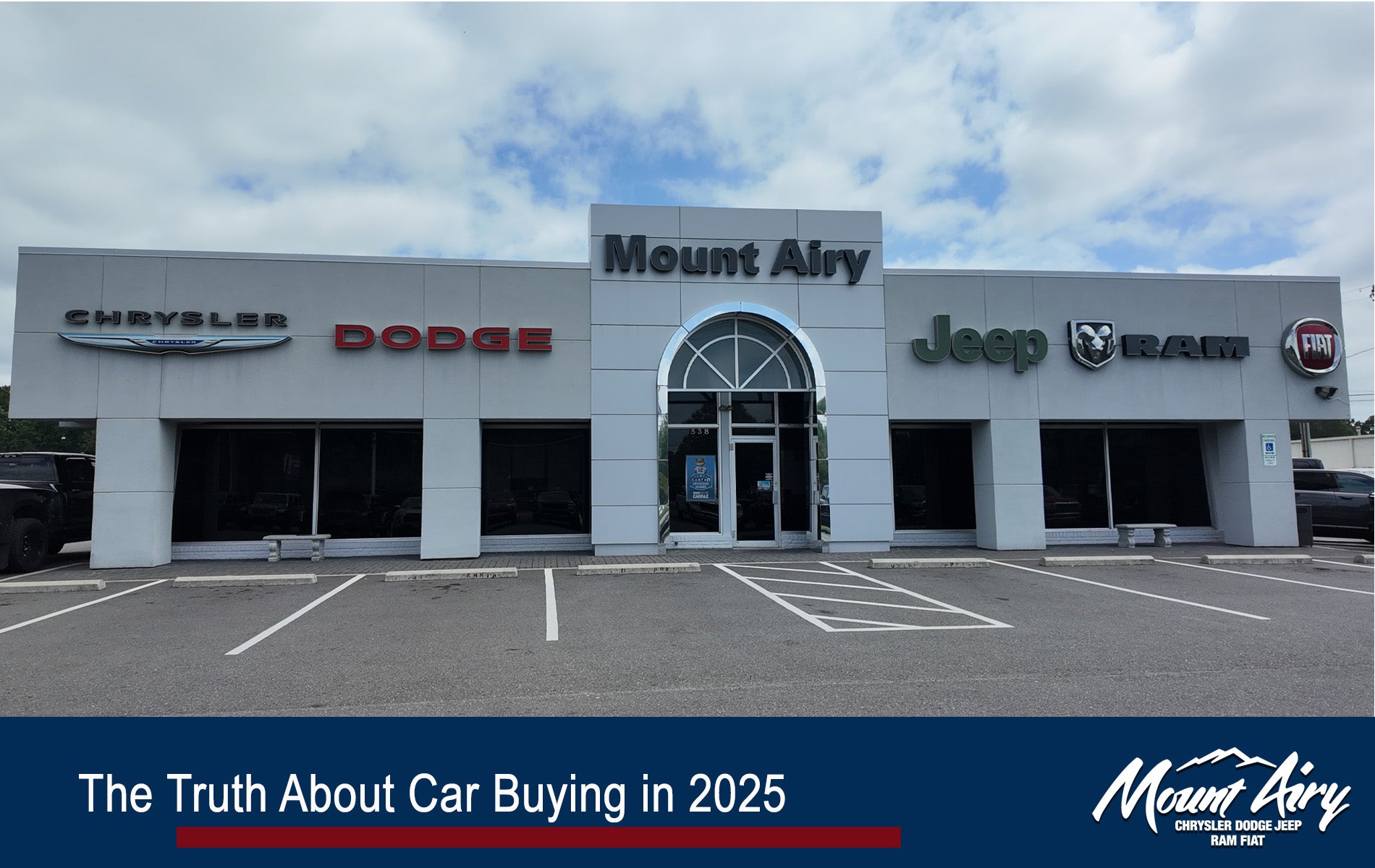
The Truth About Car Buying in 2025

If you search “Should I wait to buy a car until the end of the month?”, you’ll find plenty of so-called experts insisting that end-of-the-month car buying is the golden ticket to a better deal. But here’s the reality: it’s not that simple. Real customers and dealership employees are weighing in on Reddit, and their insights tell a much more balanced story. Real User-Generated Opinions on Reddit From r/askcarsales: “Does it actually make a difference?” “Sometimes. Sometimes not. Usually not. A lazy salesman might work harder to squeeze that last unit out.” “This is a myth… the best price is the one on the website… everybody will rush to get that deal done quickly.” — Reddit Another thread: “If you want to really play hardball… go in earlier in the month... get an idea of what the price will be OTD… wait for them to call you back…” — Reddit From r/askcarguys: “Best strategies for buying at month-end?” “It has to be negotiated… dealers always want to sell a car more than you want to buy one but with most of them you wouldn’t be able to tell.” “I usually have good luck buying at the end of the month... letting them know I’m there with intention to buy… and that I want the best deal possible.” “Zero… but good luck… nice people get great deals.” — Reddit From r/KiaEV9: “It might be marginally better at the end of a month, especially if a dealership… starts making concessions they weren't earlier.” “On the other side… when books roll over on the 3rd/4th… sales might be eager to get deals done early.” — Reddit Our Take at Mount Airy Chrysler Dodge Jeep Ram Fiat Click To Play Video Click To Play Video   We can’t speak for every dealership, but at Mount Airy CDJRF we don’t see buying at the end of the month as a major advantage. Here’s why: Small-town roots mean relationships matter. Our Scott McCorkle dealerships are based in small, suburban towns where our salespeople are also your neighbors. Many of our employees have been with us for over two decades. Their focus isn’t on chasing quotas—it’s on building trust and helping families come back again and again. Market conditions move faster than the calendar. Prices aren’t dictated by the date. They’re shaped by real-world factors like: Federal Reserve interest rates Supply chain disruptions (like the recent pandemic) Car model changes and discontinuations Manufacturer discounts and incentives These can affect pricing at any point in the month, not just the 30th or 31st. Pricing is more transparent than ever. Over the last decade, automakers have tightened up how much wiggle room dealers have in pricing. That means less “mystery math” and more fairness. It also helps protect long-term resale values instead of creating a race to the bottom on price. Today’s shoppers are savvy. Most buyers know the cost of ownership goes far beyond sticker price. They’re shopping interest rates, considering fuel requirements, and factoring in future maintenance costs. Those elements often make a bigger difference than shaving a few dollars off a monthly payment. Reputation speaks louder than timing. The best way to know if you’re getting a fair deal? Look at a dealership’s reviews and history. If the staff has been there for decades, consistently earns positive feedback, and works to find discounts and financing options, you can be confident they’re focused on your long-term satisfaction. Bottom Line Car buying myths like “wait until the end of the month” don’t tell the full story. At Mount Airy CDJRF, we believe the best time to buy a car is when you’ve found the right vehicle, with the right financing, at a dealership you can trust. And that’s what we aim to deliver—every single day of the month.

Driver safety technologies are a marvel when used responsibly

The Intersection of Safety Features and Distracted Driving in North Carolina (and Beyond)

Distracted driving is a pressing issue affecting everyone on the road. As we traverse the picturesque highways and bustling urban arteries of the Tar Heel State, the perils of divided attention demand our attention. While the dangers of texting or tinkering with our devices while driving are well-documented, another facet of this dilemma often flies under the radar: the potential distraction posed by modern safety features in our vehicles. Below, Mount Airy Chrysler Dodge Jeep Ram Fiat navigates the complexities of distracted driving in North Carolina, where even the tools meant to bolster our safety can inadvertently divert our focus from the task. Here’s a preview of the technologies we’ll discuss: Voice-activated controls are intended to reduce manual distractions, but voice commands still require cognitive attention and can potentially divert focus from the road. Adaptive Cruise Control (ACC) can reduce the need for constant speed adjustments but might lead drivers to rely too heavily on the system and become less attentive. Lane Departure Warning (LDW) and Lane Keeping Assist (LKA) are designed to prevent accidents caused by drifting. The problem is that these systems may encourage drivers to pay less attention to their actual lane positioning. Blind Spot Monitoring (BSM) is helpful for improving awareness, but relying solely on this system can cause drivers to overlook traditional shoulder checks. Automatic parking assistance helps drivers park parallel or perpendicularly. Though convenient, some drivers become overly reliant on this technology and miss important details in the process. Collision avoidance systems are known to mitigate accidents; that said, drivers can become complacent in their driving behavior and assume the system will always intervene. NC in the News Winston-Salem has recently garnered national attention for an unfortunate distinction: being labeled the most dangerous city in the United States for driving during rush hour. Not surprisingly, the designation has sparked concern among residents and officials alike, prompting a closer examination of traffic safety measures and enforcement in the area.   Data from both national and North Carolina sources has revealed another critical statistic: the period between 9 p.m. and 11:59 p.m. on Friday or Saturday nights is the most dangerous time to be on the road. There’s a genuine need for heightened awareness and proactive measures to address the specific challenges of nighttime driving, particularly during weekends.   Some transportation experts and journalists have suggested distracted driving as a leading cause of these late-night fatalities. As communities grapple with these concerning trends, concerted efforts to improve road safety and reduce traffic-related incidents are paramount. 6 Potentially Dangerous Safety Technologies So, how can we play our part in keeping the roads safe? The key is to get in the habit of using today’s stellar driver safety technology without letting it divert our attention. Let’s take a look at the features most likely to enable distracted driving: 1. Voice-Activated Controls Picture this: You're cruising down the highway, wind in your hair (or blasting A/C), and you realize you forgot to change the music. With voice-activated controls, you can just say the magic words and your favorite tunes start jamming without ever taking your eyes off the road. It's like having a personal assistant right in your car. These nifty features aren't just reserved for the luxury rides. Many modern vehicles are equipped with voice-activated controls for navigation, entertainment, and climate control systems. Voice commands are supposed to make life easier and safer on the road. After all, keeping your hands on the wheel and eyes on the prize is a top priority. But even if you're not physically tapping away on buttons, using your voice demands a chunk of your attention. You're belting out your favorite tune and trying to tell your car to crank up the A/C — all while navigating rush hour traffic. That's a lot going on in your noggin. And as much as we'd like to believe we're master multitaskers, our brains can only handle so much at once. Voice commands may seem like the answer to all your road trip prayers, but they could also be pulling your focus away from the road ahead. Fortunately, there’s a silver lining. Like any tool, it's all about how you use voice commands. If you're blasting music on an open highway with nothing but tumbleweeds for company, you’re probably safe to command away. But if you're navigating a maze of city streets during rush hour, maybe hold off on switching up that playlist until you hit a red light. 2. Adaptive Cruise Control (ACC) Adaptive Cruise Control (ACC) is like your car's personal traffic butler, automatically keeping a safe distance from the vehicle in front of you. However, as with all good things, there's a catch. While ACC can take some of the load off your shoulders, some folks start relying on it too much, zoning out or getting distracted by that tempting playlist or scenic view. Consider cruising down the highway. Everything's smooth sailing, and suddenly, the car ahead slams on the brakes. ACC is there, doing its thing, but you're off in la-la land—perhaps checking your phone or daydreaming about dinner. The outcome probably won’t make you friends with the driver you're tailgating! ACC is fantastic for taking the edge off those long drives, but it's not an excuse to switch off your brain. Keep your eyes on the road and hands on the wheel, and save the daydreaming for when you're safely parked. 3. Lane Departure Warning (LDW) and Lane Keeping Assist (LKA) As the name suggests, Lane Departure Warning (LDW) and Lane Keeping Assist (LKA) represent two significant safety features. LDW serves as a preemptive alert system, signaling drivers when their vehicle begins to unintentionally veer out of its designated lane. LKA provides an active response by autonomously steering the car back into its proper lane alignment. These systems undoubtedly offer invaluable assistance in mitigating the risk of accidents resulting from unintentional lane departures. That said, there’s a notable concern regarding their potential to foster complacency among drivers. Some people become overly reliant on LDW and LKA, which diminishes their attentiveness to maintain precise lane positioning. Consider the scenario of a driver navigating a highway with LDW regularly emitting alerts at the slightest deviation from the lane's center. Over time, the driver might develop a false sense of security and assume that the technology will perpetually compensate for all lapses in attention or adherence to lane discipline. As with the other technologies on this list, LDW and LKA are not a substitute for sustained driver attentiveness and adherence to safe driving practices. We must remain mindful of our responsibility to stay vigilant and engaged when operating a vehicle to keep ourselves and those around us safe. 4. Blind Spot Monitoring (BSM) Blind Spot Monitoring (BSM) is like having an extra set of eyes on the road. It's a nifty system that employs sensors to keep tabs on vehicles lingering in those pesky blind spots. For example, if there's a car hiding in your blind spot, BSM springs into action and gives you a heads-up through alerts. It can save you from potential sideswipes and fender-benders.   While BSM is great for boosting awareness, don’t think of it as a magic fix. Relying solely on this tech inadvertently encourages some drivers to abandon traditional shoulder checks. A quick glance over your shoulder is still an effective strategy for blind spot detection, especially when coupled with BSM. In other words, BSM is your trusty sidekick, not the hero of the story. Cover your bases to keep that safety net intact. 5. Automatic Parking Assistance Automatic parking assistance eliminates the hassle of parallel or perpendicular parking. Say, for instance, you're cruising down a busy street and eyeing that perfect parking spot, but the thought of maneuvering into it makes you break out in a cold sweat. This features takes control of the steering so you can focus solely on the gas and brake pedals. It's almost like having a parking fairy godmother guiding you into that tight spot as you sip your coffee peacefully. Automatic parking assistance is undoubtedly convenient, but there's a risk of becoming too reliant on it. You use it once, then twice, and suddenly you're wondering how you ever parked without it. Relying too heavily on this technology might cause you to miss out on crucial details during the parking process. You might overlook that fire hydrant lurking just inches away or fail to notice the curb creeping up on your bumper. Remember that this feature is meant to assist, not replace, your parking skills. Keep your eyes peeled and use a little extra caution when parking in tight spots. 6. Collision Avoidance Systems Collision avoidance systems incorporate sensors and cameras to detect potential collisions; they may automatically apply brakes or alert drivers to take evasive action. Although effective in mitigating accidents, it’s easy to develop complacency and assume the system will always intervene. These systems act as an additional set of eyes on the road to anticipate potential collisions. If a vehicle swerves into your lane, the collision avoidance system springs into action by applying brakes or prompting you to take control. However, some drivers fall into the trap of thinking, "The car will handle it," neglecting their responsibility behind the wheel. While these systems serve as safety nets, remember that you’re ultimately in charge. Proactive and attentive driving remains the cornerstone of road safety. How To Use Safety Features Properly Driver safety technologies are a marvel when used responsibly. It’s all about harnessing their assistance while maintaining your attentiveness. Here are some key strategies: Independent Driving: Regularly practice driving without relying solely on the assistance of safety technologies to hone your skills and maintain situational awareness. Backup Awareness: Even with safety features like blind-spot monitoring and collision warning systems, always incorporate traditional driving practices (e.g., checking mirrors, looking over your shoulder, using turn signals). Limit Dependency: Avoid becoming overly reliant on safety technologies by consciously using them as aids rather than replacements for attentive driving. Hands-Free Discipline: When using hands-free technology, limit your conversations to essential information. Also, don’t engage in emotionally charged discussions or complex decision-making conversations. Active Engagement: Continuously monitor the road environment even when utilizing hands-free features; that way, you’re prepared to intervene if the situation demands manual control. Regular Evaluation: Periodically assess your reliance on safety technologies and hands-free features to ensure they enhance rather than detract from your ability to drive safely. Modern safety features are designed to enhance road safety but can also pose potential dangers when used incorrectly. As we navigate distracted driving in North Carolina and beyond, it’s imperative to incorporate driver assistance tools without letting them compromise our focus. Vigilance, active engagement, and regular self-assessment are crucial to ensuring these technologies serve as aids rather than substitutes for attentive driving.

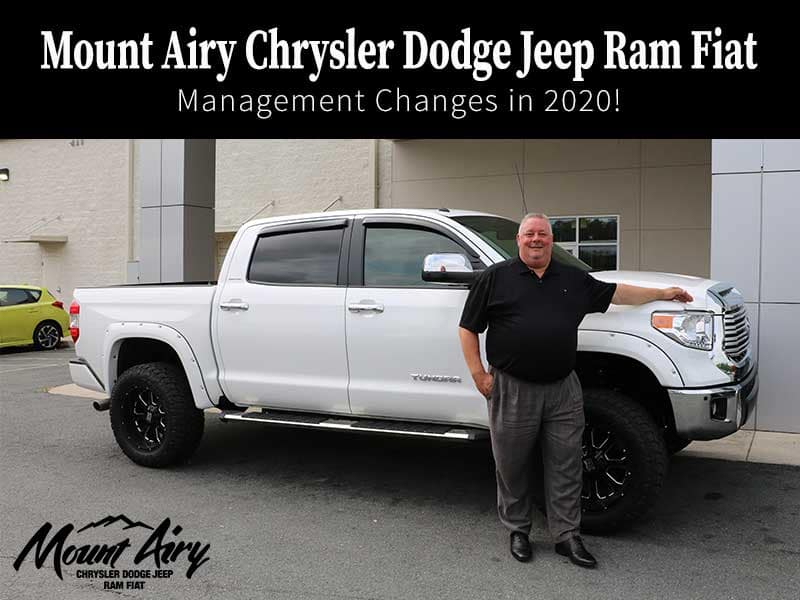
Mount Airy Chrysler Dodge Jeep Ram Fiat – Management Changes in 2020!

Jorge Martin has passed the General Manager’s torch to Thomas Williamson! Jorge will be missed!  He is a talented auto professional and was loved by all of his employees.  “We wish Jorge and his family the absolute very best ... he will definitely be missed” says dealership owner Scott McCorkle. This is the second time Thomas has stepped up the plate at Mount Airy CDJRF.  After pausing his work at the Chrysler dealership to help launch Mount Airy Toyota in 2015, Thomas is now ready to bring his unique sales initiatives to the floor at Mount Airy Chrysler Dodge Jeep Ram Fiat!

Dodge Commemorates Challenger's 50th Anniversary with a Special 2020 Appearance Package

In the fall of 1969, the Dodge Challenger made its debut for the 1970 model year and quickly became an icon in the American muscle car industry. In 2006, 22 years after production of the Challenger ceased, Chrysler unveiled a concept for a new Dodge Challenger at the North American International Auto Show. It wasn’t merely a concept of a new car; this new Challenger appeared to be a revival of the iconic Challengers from the 70s. It had the legendary HEMI engine, two-door body, wide stance, long hood, and short deck. Consumers went wild over the idea. And the revived Challenger became a reality with the 2008 Dodge Challenger SRT8. Since then, the Challenger has brought in more sales than ever in a market dominated by pickups and crossovers, with its record of 66,716 sales coming in 2018 and its most profitable third quarter in history coming in 2019. In November of 2019, Fiat Chrysler Automotive announced at the Los Angeles Auto Show that it would be commemorating the legendary muscle car with a 50th Anniversary Edition for the 2020 model year. On December 11th, order banks for Challengers with the special appearance package opened. And production of the various trim levels that include the package will occur over the next few months. Let’s take a look at some of the special features of the Dodge Challenger 50th Anniversary Edition: Trims and Color Options The new anniversary package is available on four of the nine models in the 2020 Challenger lineup: the GT RWD, R/T Shaker, R/T Scat Pack, and R/T Scat Pack Widebody. This means that the package is not optional on the SXT, SRT Hellcat, SRT Hellcat Widebody, SRT Hellcat Redeye, or SRT Hellcat Redeye Widebody trims. However, all 2020 SRT Hellcat and SRT Hellcat Redeye models will come with a 50th Anniversary badge. The showcase exterior color on the 50th Anniversary appearance package is called “Gold Rush”, which is a sort of homage to the golden era and exclusive to this package. Gold Rush, which Dodge considers one of their “high-impact paints”, is a bold hue that is sure to draw attention in any setting. Additionally, there are six other colors available in the appearance package: Hellraisin, Frostbite, Go Mango, F8 Green, TorRed, and Sinamon Stick. Styling Some of the key styling features on the 50th Anniversary appearance package include badges finished in a new gold chrome color called “Gold School”, alloy wheels finished in Gold School, Brembo brake calipers finished in Gold School, “50” logos inside the headlights, and “Challenger 50” badges in multiple areas. R/T Shaker, R/T Scat Pack, and R/T Scat Pack Widebody models include a body-color Shaker scoop that sits on a matte black hood; this matte black extends to the roof and tail of the car. The Pentastar V6 of the GT RWD doesn’t allow for a Shaker scoop. The interior of the Anniversary edition also gets some attention. In a word: details. The dashboard, floor mats, and seats feature the “50” logo, as well as the headlight housing, which illuminates the logo for a nice touch. Also, the gauge cluster sports a new yellow theme, there is carbon-fiber accenting throughout the cabin, and you will find sepia stitching on the dashboard, steering wheel, and seats. Oh, and let’s not forget about the black leather and Alcantara sport seats. Production Timeline and Pricing There will only be a total of 1,960 50th Anniversary Challengers built for production from February to May 2020. This includes 70 of each trim/color combination, which is a nod to the iconic 1970 muscle car. It’s expected that the TorRed models will be produced in February, while the Hellraisin, Frostbite, and Go Mango models will be produced in March. The exclusive Gold Rush models are expected to be produced in April, and the F8 Green and Sinamon Stick models will close out production in May. Here is a list of the prices for the 50th Anniversary appearance package on each model: GT RWD — $4,995 (Model starting price of $35,690) R/T Shaker — $5,495 (Starting price of $40,090) R/T Scat Pack — $5,995 (Starting price of $44,990) R/T Scat Pack Widebody — $5,995 (Starting price of $50,990) Conclusion If you’re a lover of muscle car tradition, it doesn’t get any better than a 2020 Dodge Challenger with the 50th Anniversary appearance package. Since there are so few being produced, you would likely need to order one immediately if there are any available. Even if you don’t find a model with the anniversary package, there are plenty of top-tier Challenger models to choose from. And even though it’s well into January, New Year savings might still be an option. Give us a call or drop by our dealership to find out more!

Electric Vehicles

How BEVs Could Be the Future (And Why They May Not Be)

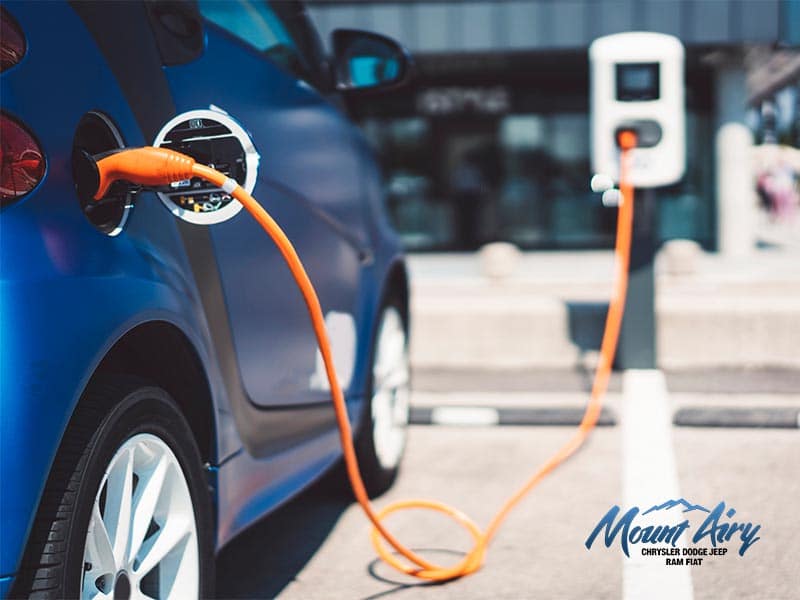
Demand for plug-in electric vehicles (EVs) is growing, though they still only claimed about 2% of the U.S. market share in 2018 (global market share is similar). That number includes battery-operated vehicles (BEVs) and plug-in hybrid electric vehicles (PHEVs). The thought on everyone's mind: is this the future of driving? The primary difference between the two types of vehicles is that a BEV runs solely off the energy from the vehicle's battery, while a PHEV uses the battery alongside a fuel tank that kicks in at various intervals. There would be clear benefits to drivers and the environment if BEVs were to become mainstream. However, there are currently just too many drawbacks to know how successful the BEV market can become. While many proponents are hopeful that BEVs will eventually become commonplace, the future of these vehicles remains largely unknown due to a number of unanswered questions and issues yet to be resolved. For instance, how will drivers have access to charging their vehicles? Will there be convenient charging stations like there are gas stations? Also, can we expect improvements to be made with batteries in the future? This article will explore the potential advantages of a BEV-driven world and the challenges that BEV drivers currently face, and we'll take a look at some of the main questions and issues that are too prevalent to be ignored. ADVANTAGES OF A BEV-HEAVY MARKET Even though we are still in the early stages of developing electric vehicles, BEVs currently come with many benefits, and it's not hard to see how these benefits could become even more impactful as technology improves. Lower Operating Costs For one, it's much cheaper to charge a BEV than it is to run a traditional vehicle off of gas; it's actually about one-third of the cost. Also, a BEV contains very few moving parts compared to a traditional vehicle, which means it's less expensive to maintain. For instance, with a BEV you don't have to worry about servicing a starter motor, fuel injection system, exhaust system, or radiator, among many other components. Though many improvements need to be made to these vehicles' batteries, most BEV manufacturers provide an eight-year warranty on their batteries even now. Environmental Benefits Some of the most obvious advantages are those that benefit the environment. BEVs have virtually no exhaust emissions, which means they emit much less pollution than traditional vehicles do. And if you use renewable energy for charging, greenhouse gas emissions are reduced even lower. For example, rather than charging from the grid, you can use a polar PV system while there's daylight. If you must use the grid, you can still minimize greenhouse gas emissions by purchasing green power from your electricity company. Even the manufacturing of some of the top BEVs is eco-conscious. For instance, the Ford Focus Electric and Nissan Leaf are largely made of recycled and bio-based materials, such as plastic bags, water bottles, and second-hand car parts and home appliances. Health and Safety Along with the financial and environmental benefits, BEVs can help improve our health and safety. Less pollution from exhaust means better air quality, which can reduce health problems caused by pollution, and BEVs create much less noise pollution than traditional vehicles. Also, since BEVs typically have a lower center of gravity, they are less likely to roll over. Furthermore, fires aren't as much of a risk, and the body structure of BEVs can prove more durable in a collision. DISADVANTAGES OF CURRENT BEV MARKET Of course, there are also drawbacks to BEVs. While they have enjoyed success, it has been with a limited group of consumers. Charging Times Tesla has led innovation in the BEV market in many ways, including its Supercharger networks, which can charge vehicles in about 30 minutes. However, that's still a lot more time than it takes to fill the gas tank of a traditional vehicle. What's more, scientists behind the efforts of manufacturers like Tesla and Toyota have their doubts about the possibility of reducing charging times enough to satisfy mainstream consumers. And since Toyota has been in the electric vehicle game for over 20 years, that speaks to the magnitude of this problem. Electricity Generated Another prevalent issue with BEVs is that they require electricity, which must come from somewhere. In states like California, most of the electricity comes from natural gas supplies, but states like West Virginia use coal to generate up to 90% of its electricity. Overall, about 38% of electricity in the United States is generated by coal. This begs the question: just how clean and green are electric cars? In short, it depends on where in the country you are driving. Furthermore, the lithium-ion batteries used by manufacturers like Tesla contain components that can potentially harm the environment by way of ecological toxicity and contributing to global warming. Limited Categories Finally, you don't see any BEVs that fall under the heavy-duty truck category. This is mainly because the technology isn't workable for truck applications—and it won't be anytime soon. This is a serious problem because there are 2 to 3 million heavy-duty trucks on the road in the U.S. Much of the American economy depends on Class 8 commercial trucks, which guzzle 30 times more gas than the average automobile (about 35 billion gallons each year). It's difficult to see how BEV technology could advance enough to accommodate the heavy-duty truck category in the foreseeable future. However, if such trucks were able to be produced in an electric format, it could drastically decrease oil dependence and significantly benefit the trucking industry financially. THE IMPORTANCE OF CHARGING STATIONS There are currently about 20,000 public charging stations and 57,000 outlets for plug-in electric vehicles in the U.S. Here's the thing: 4,800 of those stations and 18,200 of those outlets are found in California. Not surprisingly, California has also accounted for almost half of all BEV sales in the country since 2011. If there is hope for the BEV market to experience continued growth—and especially if battery-operated cars are to become mainstream—there must be more charging stations created throughout the country. In a sense, the future popularity of BEVs in any particular area of the country depends on the accessibility of charging stations in that area. However, it gets tricky because states that don't sell a lot of BEVs are less inclined to invest in public charging stations, but if they never decide to invest, then their sales will probably not improve by much. Therefore, there must be a break in the cycle at some point if BEVs are to become commonplace in the future. Sure, there are some people who could charge their BEV at home, but that's a limited category of consumers. Without an adequate number of charging stations open to the public, much like gas stations are, BEVs will never reach the mainstream. To put it into perspective, there are approximately 168,000 public gas stations in the U.S.—more than eight times the number of charging stations. The majority of consumers will never make the jump to BEVs until that gap is dramatically closing. THE ROLE OF BATTERIES As essential as charging stations are for the future of BEVs, batteries may play an even more important role. And BEV batteries need to undergo a lot of development if electric vehicles are to become commonplace. Battery Anxiety The term "battery anxiety" is often used in reference to one running out of battery power on their smartphone. We've all seen the symptoms: a family member searching frantically for a charger cable; a co-worker turning their desk over, only to ask you if they can borrow a charger; even a stranger asking if they can PowerShare with your phone. Chances are you've experienced the symptoms yourself. In a study administered by electronics manufacturer LG, 9 out of 10 people showed signs of battery anxiety. The same logic is behind the term "range anxiety" in reference to electric vehicles. If such a phenomenon has that kind of grip on people with smartphones, you can imagine the impact of this anxiety when it comes to driving a car. Range anxiety is one reason why many consumers won't even consider going the BEV route. Most BEVs allow drivers to go about 100 miles fully charged (the Tesla Model S is an exception, as it allows drivers around 250 miles). This is another reason why the scarcity of charging stations is such a severe problem. Nonetheless, many manufacturers have pledged to develop BEVs that will hit about 200 miles per charge. That would surely make a big difference, but it's still a far cry from a conventional vehicle that can go 300 to 400 miles on a full tank of gas. The Problem with Lithium-Ion Batteries Most newer electric cars these days are powered by lithium-ion batteries. These batteries are not without their advantages, such as the fact that they are light-weight (as compared to lead-acid batteries), relatively low-maintenance and can last for 8-10 years. However, there are some serious issues to consider as well. For example, lithium-ion batteries are expensive. While a high-end lead-acid battery—as used in most traditional vehicles—costs around $120, a typical lithium-ion car battery costs in the $1,700 range. Also, lithium is highly reactive. This means if they are damaged or installed incorrectly, they can explode. Moreover, the cells used in lithium-ion batteries are made with rare-earth metals; the supply of these metals is limited, and they're dangerous to mine. Most workers who are tasked with retrieving rare-earth metals are laboring in harsh conditions, to say the least (and in some cases this means illegal child laborers). The Prospect of Flow Batteries Enter a new hope for BEV proponents: the "flow battery." Scientists are currently working on this new type of refillable battery that they hope will replace lithium-ion as the commonplace battery in BEVs. The strongest appeal of the flow battery is that it solves most of the biggest problems consumers have with BEVs. Depending on the model of vehicle and the power source used, it can take anywhere from 30 minutes to 10 hours to fully charge a lithium-ion battery in a BEV. If the flow battery is a success, it will allow drivers to empty their battery liquid and pump in new liquid in minutes—roughly the same time it would take to fill a gas tank. What's more, since the basic infrastructure is already there, it would be easier for gas stations everywhere to be retrofitted to pump this battery liquid in place of gas. This means that the scarcity of charging stations would no longer be a problem—thus, no more range anxiety. There is still a lot of progress to be made in the development of flow batteries, but it's possible we will see some form of them in the next three years. THE BOTTOM LINE It's easy to see how drivers and the environment would benefit from a BEV-driven market. All things considered, they are a more eco-conscious alternative to traditional vehicles, they are cheaper to operate, and they offer health and safety benefits. That said, BEVs have their share of drawbacks as well. If BEVs are ever to enter the mainstream, more charging stations and better batteries must be made available. It looks like the work is being done to solve these issues, but only time will tell whether or not BEVs are indeed the future.     -Alex Watson

America’s First and Only Hybrid Minivan

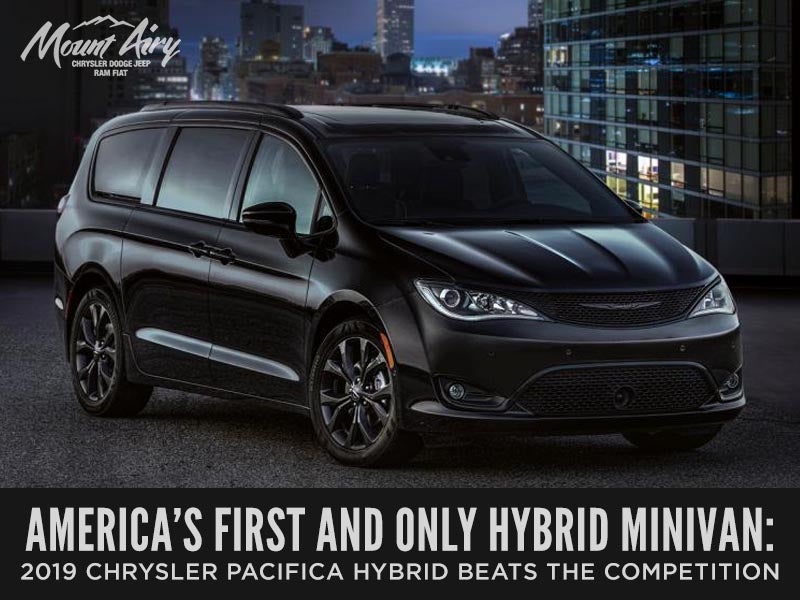
America’s First and Only Hybrid Minivan: 2019 Chrysler Pacifica Hybrid Beats Out the Competition

America’s families have asked and Chrysler has delivered. Introducing America’s first hybrid minivan, and the largest hybrid vehicle in the U.S., the 2019 Chrysler Pacifica Hybrid is the best of its class. The 2019 Pacifica Hybrid, according to Business Insider, still outranks Honda and Toyota’s comparable models. Now at Mount Airy Chrysler Dodge Jeep Ram Fiat, you can take the 2019 Pacifica Hybrid for a spin and fall in love with a vehicle that delivers the greatest fuel efficiency, electric mileage, and style for your money today. At a glance: America’s largest hybrid vehicle The most technologically advanced seven-passenger hybrid MSRP: From $40,245 $7500 tax credit 3 rows of family-friendly seating The best combination of safety and fun for your next road trip Hybrids: A More than Happy Medium Hybrid vehicles are a great gateway to the world of plug-ins and electric vehicles. For an everyday vehicle to run errands, commutes, and kids all around, a hybrid means you lose very little by gaining a plug and enough electric range for many people to never use a drop of gas. The Pacifica Hybrid is specifically a great vehicle for families who can’t make the leap to a fully electric vehicle. Hybrids are reasonable; with a lack of infrastructure in place, such as the absence of charging stations for electric vehicles right now in North Carolina, electric vehicles just aren’t cut out for out-of-town family visits or longer road trips. But for those who want to keep their driving local or cut down emissions, or go entirely tailpipe-emissions free, the Pacifica Hybrid is the way to go. Saving You Money, and Saving You Time Charging an electric vehicle isn’t as fast as pumping gasoline for sure, but it does not have to have to take up all of your time. You can charge your battery at home in only two hours with the available 240-volt Level II charger. In comparison… The Pacifica Hybrid 2019’s quick charge in just two hours is faster than the Mitsubishi Outlander PHEV, the Volvo XC90 Plug-In Hybrid, and the Chevrolet Volt. We’d say that’s pretty quick! Chrysler Pacifica Hybrid: 2 hours Chevrolet Volt: 2.3 hours Volvo XC90 Plug-In Hybrid: 3.0 hours Mitsubishi Outlander PHEV: 3.5 hours Safe. Secure. Sound. The Chrysler Pacifica Hybrid has over 100 standard and available safety and security features. Some of these impressive features include: Available full-speed forward collision with active braking Available LaneSense lane departure warning with lane keep assist Available adaptive cruise control with stop and go Available 360 degree surround-view camera Fog Front driving lights ParkSense with Stop Parking assist And what’s the overall NHTSA safety rating? It shouldn’t be surprising that the Pacifica Hybrid received a 5/5 rating. What is the total combined driving range of the Pacifica Hybrid? The Pacifica Hybrid has an 82 MPG rating, and a 32-mile electric range with an incredible total driving range of up to 520 miles. All of those family vacations you have been dreaming of? Totally within your reach. Crunching Numbers and Configurations: The Chrysler Pacifica Hybrid at a glance includes: Payload: 1,313 lbs Warranty: 3 yr/36,000 miles basic, or a 5 yr/60,000 miles powertrain Curb weight: 4,987 lbs Fuel tank capacity: 16.5 gallons Engine: 3.6L V-6 Transmission: 1-speed automatic Power: @ rpm Drivetrain: front-wheel The configurations range from: Touring Plus: $40,245 Touring L: $42,445 Limited: $45,795 Specs: Riding in Style and Comfort The interior of the Chrysler Pacifica Hybrid is designed to impress. With the most innovative seating and storage in its class and an eco-chic design, the Chrysler Pacifica Hybrid is as family friendly as it is environmentally friendly. The basic trim includes ABS and driveline traction control, with 17-inch polished and painted accented aluminum wheels. Climate control in the vehicle truly gives control to everyone in the vehicle. The Pacifica includes front air conditioning, dual-zone automatic, and rear air conditioning as well. It may be cold in the driver’s seat but are the kids complaining about being hot in the back? Separate controls in the back ensure everyone in the vehicle is comfortable. For radio-aficionados, the Pacifica comes standard with SiriusXM, AM/FM/HD/Satellite, and a seek-scan radio, all controlled by two first row LCD monitors. These monitors feature the most advanced entertainment system available in seven-passenger hybrid, meaning fun, immersive, and smart interaction for the whole family. All of the doors on the Pacifica include Keyfob Remote keyless entry. It also includes heated mirrors, cloth seat trim, driver lumbar support, and a 60-40 split-bench third-row seats. The Touring Plus trim provides the driver and front passenger heated-cushion, heated-seatback, heated front seats, and a leather seat trim. The additional or replacing feature on Touring L trim includes Nappa leather seat trim, driver and passenger lumbar support, a navigation system, a panoramic sunroof, 20 speaker Harman Kardon sound, a $775 S Appearance package, and a 120 AC outlet. What does the Pacifica Hybrid cost? The price ranges from $41,490 to $51,050 depending on the trim levels. Does the Pacifica Hybrid qualify for a tax credit? When you purchase an electric vehicle, you may be eligible for a one-time federal tax credit of up to $7500, which is not an incentive guaranteed for other hybrid vehicles on the market. It’s worth noting that this nonrefundable credit doesn’t carry over year to year, so make sure you take advantage of this tax credit while you can. You can receive a portion of the $7500 tax credit even if your tax liability is below $7500. Ask our team at Mount Airy CDJRF if you’re interested in learning more about the tax incentives available to you. The Pacifica Hybrid: How does it work on a long haul? What if you can’t plug in to charge? While the Pacifica doesn’t have enough battery capacity to go entirely on electric power, it can be used as fully electric around town, and as a hybrid for long trips. With a quiet ride inside, excellent captain’s chairs in the first and second rows, and room for seven total passengers, there’s nothing keeping you from enjoying a road trip in this vehicle. The Pacifica Hybrid delivers more usable all-electric range than most other plug-in hybrids and actually recharges the battery pack on regenerative brakes. So, even if you’re running on gas, as you drive and stop, the battery can recharge slightly. Now you can drive where you want when you want without any of the range anxiety. The Chrysler Pacifica Hybrid seamlessly switches from an electric motor to a gas engine for greater peace of mind and total hybrid power. How do you charge it and how long does it take? When you purchase a Pacifica Hybrid, it comes equipped with a Level I 120-volt AC charging cord set, which requires a conventional 120-volt AC grounded wall receptacle along with the portable charging cord set.  Ensure that your vehicle is turned off and plug the charger cord into the vehicle's power outlet. You can find the charging cord set by opening the cargo area storage bin on the driver’s side, which includes the charging cord in a storage bag. Keep in mind that this cord set is for Level I charging only. Once you begin, insert the AC plug of the charging set into the grounded wall receptacle. Then take the charge connector and place it in the vehicle’s charge inlet. A “click” will be heard when inserted correctly, and the charge active indicator lights will cycle from left to right. Once your vehicle is fully charged, the lights in the charge indicator will show all five bars. You can also set a charging schedule with the available 4C NAV in the Hybrid Electric pages app. On the Charging Schedule page, you can set a charging schedule by checking the box next to the setting “Enable Schedule” and customizing as needed. You can choose to “charge Until Full,” which allows the vehicle to fully charge versus stopping at a certain point. You can manage all of this right from your smartphone. The Level 1 120-volt charger can be fully recharged in approximately 14 hours. You can shorten the time and charge your Chrysler Pacifica Hybrid in as little as 2 hours by using an available Level II 240-volt charger. Charging times are estimated but can change based on the age and condition of the battery, and the current provided to the charger. What’s the expected life of the battery? The expected life of the lithium-ion battery is the life of the vehicle. What about charging from a public charging station? How long does that take? At a public charging station, the Pacifica Hybrid can be charged on Level II 240-volt chargers and takes around 2 hours to fully charge from a completely empty battery. What is the estimated cost of charging the Chrysler Pacifica Hybrid? It takes 13k to fully charge the battery and using the national average electricity rate of $0.12/kWh, it costs approximately $1.66 to fully charge the battery using a home charger. Can you tow with a Chrysler Pacifica Hybrid? If so, how much can it tow? Towing a trailer is not permitted on the 2019 Pacifica Hybrid, as hybrids are not rated for towing and the added weight of the battery already weighs on the vehicle significantly. You cannot order the Pacifica Hybrid with a towing package as a result. The non-hybrid Pacifica with the tow package is rated for 3.6K lbs. Is the Pacifica Hybrid worth it? Here at Mount Airy CDJRF, we believe that the Pacifica Hybrid 2019 speaks for itself. As not just the only hybrid minivan on the market, but the best of the best when it comes to your hybrid family vehicle options, the Chrysler Pacifica is a classic in the making and built to suit families of all kinds. Torn between the Pacifica and the Pacifica Hybrid? It’s hard to justify not buying the plug-ins, as the non-hybrid is basically the same as the hybrid unless you really need the second-row seat to fold into the floor on a regular basis, or if you’re locked into a tighter budget and are seeking a lower spec Pacifica. With seating for up to seven, it’s the perfect vehicle for families big and small. With the purchase of a Chrysler Pacifica Hybrid, you may be able to factor in the $7500 federal EV tax credit, alongside other possible state and local added incentives, meaning that the hybrid can definitely cost less than the equivalent non-hybrid Pacifica, or other similar vehicles. For example, any other minivan, including the Honda Odyssey, gets nearly as expensive when matching what the Pacifica includes, and they don’t qualify for the $7500 EV tax credit, or other incentives like the carpool lane stickers. Come by Mount Airy CDJRF today to check out the 2019 Chrysler Pacifica Hybrid and see why it’s truly the best in its class.   -Tayler Green

Jeep Wagoneer

"Wood" You Buy a Wagoneer? Jeep May Relaunch Classic SUV

When the Jeep Wagoneer was first manufactured it was an immediate hit, and in the many years since, it has turned into a celebrated collector’s item. Lately, there has been speculation about a possible return of the venerable “woodie.” With its whitewall wheels, vinyl-wood paneling, and roomy interior, the Jeep Wagoneer (SJ) was designed to become a classic and reigned all popular from its introduction in 1963 to its final days in 1991. While other makers focused on stripped-down work trucks, Jeep loaded the Wagoneer with features like power steering, an automatic transmission, and a factory installed AC or radio. Available as a two-door or four-door, the Wagoneer brought the entire family together to ride in ease and comfort. First marketed as a station wagon, the high-riding, boxy car was rechristened a sport utility vehicle when Jeep coined the term in 1974. After nearly 30 years in production, the Wagoneer rolled off the production line for the last time on June 21, 1991. It was metallic hunter green. But… good things roll back around to those who wait. Jeep is rumored to be working on plans to launch a luxury edition of the Wagoneer — with faux-wood paneling! — at some point in the not too distant future. It once was scheduled for a 2019 release. Guesses now point to around 2020 or 2021. Will the new Wagoneer project the same campy-cool, beach-vibe as its former self? There have been other vehicles to try and posses the same coolness as the original luxury SUV. The Plymouth Voyager minivan slapped a few wood-like pieces on its sides, but it lacked style and looked exactly like the beast it was — a poorly-designed people mover. There was no cool factor. The Buick Roadmaster Estate, a tremendous boat of a car build with a V8-engine from 1991 to 1996, did a little better job sporting its wooden panels, but the rise of the full-sized SUV put it out of production. These attempts, and many others, to create a modern woodie paled in comparison to the Wagoneer. There’s more to re-launching an old classic than just keeping a few of its most memorable parts. A lot of what turns old cars into classics is the very fact they are old. They herald a time gone past when wind tunnel tests and gas mileage ratings weren’t as much of a concern and bumpers were made of steel. Even those who wouldn’t describe themselves as car aficionados have a bit of nostalgia for the cruisers of old with rusted out Buicks and Fords making the backdrop of plenty a black-and-white wedding photo on Pinterest. How well a modern Wagoneer would sell? Volkswagen brought back the Bug. They updated it, made it run better, added luxury items, but kept car’s most iconic features: the round shape, its cute small frame, and its zippy pick-up. Meanwhile, the Ford Thunderbird, which created the “personal luxury vehicle” niche when it was release in 1955, bombed when it was briefly resurrected from 2002-2005. Whether a new Jeep Wagoneer is vastly different or very much the same — leaked pictures from back in 2016 hinted at something like a vastly upgraded Grand Cherokee — there’s something exciting about the SUVs pioneer making something old new again. In addition to the Wagoneer, a Jeep Wrangler-based truck is slated for release in late 2019. One thing that has been proven time and time again is that if any car maker has succeeded by reinventing itself on a theme, it’s Jeep. The style, rugged toughness, and sheer pleasure of driving any Jeep has earned the brand an extraordinarily loyal following.

Pet Safety by Mount Airy CDJRF

Don't Leave Your Pet In The Car!

North Carolina is one of several states in which it is now illegal to leave your pet locked in a hot car. Studies have shown that in just a short amount of time the temperature inside a car, even on a seemingly cool day, can soar to surprising levels. At Mount Airy Chrysler Dodge Jeep Ram Fiat, we know that there are many others who, like us, enjoy taking their four-legged friends out on the road. We hope the proper precautions will keep all family members safe and happy. It is unlawful to confine an animal in a motor vehicle under conditions that are likely to cause suffering, injury, or death to the animal due to heat, cold, lack of adequate ventilation, or under other endangering conditions. Often people think that cracking the windows will provide adequate ventilation to keep a car cool. It doesn’t — at least not to any significant effect. Here are the facts from the Humane Society: When it's 72 degrees Fahrenheit outside, the temperature inside your car can heat up to 116 degrees Fahrenheit within an hour. When it's 80 degrees Fahrenheit outside, the temperature inside your car can heat up to 99 degrees Fahrenheit within 10 minutes. How do we at Mount Airy Chrysler Dodge Jeep Ram Fiat know this is true? Because we spend A LOT of time with cars! Just imagine how we feel getting into an all new Ram 1500, Dodge Journey, or Jeep Cherokee that’s been sitting out on the lot on one of these hot summer days. While we’re always excited to show you features like power windows and a sunroof, we also just want to let some of all that hot air out of the vehicle. “Stats do not lie: dogs die in hot cars,” states DMV.org. “So do cats, kids, and videotapes. It is a bit of a no-brainer that you would not leave your child in the car with no water on a 100-degree day! But somehow people think dogs are different than humans. They are: they have fur. You know what it is like opening the door to the car on a hot day. Imagine your dog in there with a fur coat.” We know that it may seem like second nature to put the dog in the back of the pickup truck and go out for a ride, but the fact of the matter is that it’s not safe. “Although you may have a pickup truck and are under the impression that a dog and truck bed go hand-in-hand, you are mistaken,” states DMV.org. “Each year thousands of dogs are killed while in a truck bed, mostly from falling out or being bonked by road rubbish.” And your dog’s habit of hanging its head out the window? While it seems like fun, it too can pose a hazard due to wind speed damaging the respiratory system, tree branches or other road-side growth striking an eye, or even a wayward paw rolling the window all the way up. According to the American Kennel Club’s Canine Health Foundation (AKCCHF), dogs can suffer dehydration, heat exhaustion, heat stroke, and sudden death from cardiac arrhythmia. Although a dog’s normal temperature is around 101 degrees, just a two degree internal temperature increase can start to threaten their well-being. The physical signs over overheating for a dog are not unlike the physical signs for a human. “Panting, followed by disorientation and fast, noisy breathing could signal overheating,” the AKCCHF writes. “Other possible signs: Collapsing or convulsing, bright red or blue gums, vomiting and diarrhea.” Dehydration frequently accompanies overheating. Severe dehydration may require IV fluids to treat. “Signs of a dehydrated dog include sunken eyes and dry mouth, gums and nose,” states the AKCCHF. Poor skin elasticity is another dehydration symptom, which you can test by gently pulling up on the skin at the back of your dog’s neck. If the skin doesn’t immediately spring back to its normal position, your dog may be dehydrated. The longer it takes for the skin to return to its normal position, the more severe the dehydration.” These physical signs clearly indicate that your dog is not feeling well. Any heat-related condition, if severe and prolonged enough, can result in organ damage. Hospitalization may be required. The AKCCHF notes that dogs kept outdoors or used during hunting may also be at risk. Plus, just because the heat is gone that doesn’t mean that the danger is gone too. “Even a dog that has seemingly recovered should be examined,” reads an article in Field & Stream. “Some effects of heatstroke, involving the dog's vital organs, won't show themselves until the day after an incident. Also, once a dog has had a heat episode, there's a likely chance it will happen again, even under lesser conditions.” Cats, despite their love for a nap in the sun, also can overheat. Their physical signs are very similar to a dog’s. A cat’s normal body temperature also is around 101 degrees, but anything over 102.5 can become threatening. Kittens are more susceptible to overheating that adolescent or adult cats. You may not take your cat for a ride on the regular, but it’s worth remembering cats-in-cars safety tips for trips to the vet or moving. “Some cats will hop in a car like a dog. But this is rare, and most likely, to ensure Fluffy is at least somewhat comfortable, you'll need to put her in an appropriate-sized carrier,” states DMV.org. “She may not like it; she may meow to a decibel that is painful. She may even avoid you for days afterward in protest, but the carrier will safely transport her.” And don’t forget that pets CAN get sunburned! Animals with pale skin, particularly those with white fur, can burn just like humans. A bit of sunscreen on the tips of the ears or a pink nose is okay to apply — just choose a sunscreen you would be willing to put on yourself or your child. Consumer Reports offers a sunscreen buying guide online. Do you know what to do if your pet does have a heat-related illness? If possible, take your pet’s temperature. Using a rectal thermometer, obtain a reading and report the information to your vet. Cool your pet down. Damp towels over a dog’s neck, under its armpits, and between his hind legs can start the cooling process. Pour cool water over a dog’s ears and on its paws also helps. If you’re outside, make use of bodies of water like streams or lakes. Provide cold water to drink. Never force an animal to drink as it may result in choking. You can however gently pour cold water over an animals’ mouth and tongue. Don’t give ice! Ice may cause a shock to the system. Head to the vet. Call ahead to let the vet know about your emergency situation. If you’re traveling, seek out an emergency vet clinic. First responders like police and medics may be able to help you find one. Now that you know more about how to keep your pets safe, why don’t you join us in appreciating a few of the great animal-related car commercials from over the years? 2018 Chrysler Pacifica ft. Kathryn Hahn 2018 Jeep Wrangler – Jurassic Park 2017 Chrysler Pacifica ft. Seth Myers 2017 Fiat 500X Crossover 2017 Dodge Hellcat Unleashed 2017 Jeep X Games 2013 Dodge Ram Laramie Longhorn ft. Sam Elliott We hope to see you — and your four-legged friend — at Mount Airy Chrysler Dodge Jeep Ram Fiat soon! Sarah E. Kucharski, Writer, Mount Airy Chrysler Dodge Jeep Ram Fiat

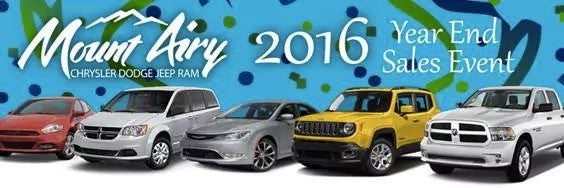
2016 Year End Sales Event

Car Buying for Novices

The Long-Term Plan Vs. The Short-Term Savings (Don’t remain in the dark when purchasing a new car.) Let Mount Airy Chrysler Dodge Jeep Ram help you with all your financial needs. IT’S THAT TIME OF THE YEAR AGAIN Time to purchase all those holiday presents for loved ones. Time to reflect on the year gone by. Time to ponder next year’s goals. Time to reward yourself with a brand-new vehicle from Mount Airy Chrysler Dodge Jeep Ram. END OF THE YEAR CAR BUYING OFFERS A TON OF OPTIONS Do you purchase a brand-new 2017 model, say a 2017 Chrysler Sedan or a 2017 Ram 1500 from your pals at Mount Airy Chrysler Dodge Jeep Ram? OR Do you save some of your hard-earned coin and take advantage of the great prices on brand-new 2016 models, say a 2016 Dodge Challenger or a 2016 Jeep Cherokee? Whatever (and whenever) you choose to purchase a vehicle from Mount Airy Chrysler Dodge Jeep Ram, you need to keep in mind both the short-term costs of buying a car (the car loan) and, arguably more important, the long-term financial costs (warranties,wear and tear). If you’re like 105% of the population, you dread the extended warranty up selling that is common when purchasing an item that will inevitably need fixing. You don’t want to spend hundreds of dollars to extend the life of your new stainless steel fridge or your new computer. The sticker shock clouds the potential long-term savings. Similarly,car buyers tend to walk into the shop looking for the best deals on the dreaded car loan. But in doing so, they can easily neglect and pass over the value of extended warranties and the overall financial impact this vehicle will have on their fiscal livelihood. Whether you are a millennial just starting out financially or in a more mature financial situation, there are some basic facts about the cost of car buying that must be considered before you visit Mount Airy Chrysler Dodge Jeep Ram Fiat. CAR LOANS: Shorter is Better As someone who has financed my family’s last two vehicles with 6-year loans in order to “save” money each month, I can attest to car-buying ignorance. Like many professionals trying to lower monthly bills, I was tempted by the lower cost per month that loans over the traditional five-year loan offered. What I knew, but failed to really contemplate, was that the interest I would be paying over that extended year would negate a nice chunk of my monthly savings. Never again. CAR LOAN NUGGETS In 2015, more than 70% of new cars were purchased with loans that were longer than the traditional 5-year (60 month) loan. The average car loan lasts 67 months. For perspective, the average car loan in the 1970’s was right around 36 months. Interest rates tend to rise with each additional year of the loan, eating into the savings you thought you were rejoicing in each month with the lower average monthly payment. The average dollar figure for car loans (new vehicles) is around $30,000. Barely 10% of car buyers qualify for a zero-rate loan. So why are shorter-term loans the more prudent option? For starters, you want to avoid negative equity. Let’s say you want to trade in your vehicle before your loan is paid for. Now, you shouldn’t do this…ever. The longer you keep your car, the better. Years of not having a car loan will offset the declining depreciation. But for some reason you decide to trade in your car with an existing loan still on the books. The longer the loan is, the less equity you will have. It’s simple math. Plus, 20% of the average car’s value is gone, kaput, vanished without a trace the minute you leave the dealership’s lot. Considering $33,000 is the average price for a new car, we are not discussing chump change here. CAR OWNERSHIP: Longer is Better Again,speaking basic math here, the longer you own your car, the more long-term savings you will incur. For some, when the car loan is paid off, the love affair with the vehicle is lost. The driver’s eyes begin to wander from the trusted, reliable vehicle parked in the driveway to the younger, more attractive models idling at the dealership. As much as Mount Airy Chrysler Dodge Jeep Ram would love your return business, holding off this urge for a new vehicle is the fiscally responsible move to make. Rather than a divorce, a long-term relationship with your vehicle will put more money in your pockets. BY YEAR 10 OF THE RELATIONSHIP, YOUR VEHICLE’S DEPRECIATION RATE WILL MOST LIKELY BE NEGLIGIBLE. But you now you have another financial decision to ponder. Do I extend the dealership’s warranty to protect my long-term investment? Car buyers are a curious bunch. We want lower monthly payments (and are willing to spend more over the loan’s life to achieve this) and a reliable, durable vehicle. But, one way to extend a vehicle’s life is to pay for it by extending the dealership’s original warranty. HOW DO EXTENDED WARRANTIES WORK? Extended warranties may be purchased at the sale of the new vehicle with the dealership. The reliable staff at Mount Airy Chrysler Dodge Jeep Ram would be more than glad to walk you through this process. Extended warranties may also be purchased from a third-party provider. As the case for any purchase, if you take this route, be certain you do your research. Extended warranties do not have to be purchased when you buy your car. You may wait until the dealership’s original warranty is near the ending date to start this process. Extended warranties are your car’s safety net if you plan, as advised, to stay married to your vehicle beyond the life of the car loan and beyond the life of the original dealership warranty. They exist to help you reduce the risk of expensive repairs that can cripple a monthly budget. There are different types of extended warranties to fit your vehicle’s needs. Comprehensive bumper-to-bumper coverage. Coverage for specific components of your vehicle. Things to consider: Most extended warranties range between 3-5 years. Many extended warranties provide coverage for rental cars and towing expenses. Coming back to lowering your overall cost of your vehicle, if you decide to purchase an extended warranty when you purchase your car, consider paying for it separately. Rolling it into the car loan’s value means you will be paying interest on the extended warranty. Every dollar counts. An interesting psychological element to extended warranties is that research shows those who do have extended warranties are more apt to get maintenance and repairs done on the car than those who do not have an extended warranty. Common sense, really. You paid for something, so why not use it? And using the warranty improves the condition of your vehicle. FACTORS TO CONSIDER WHEN IT COMES TO LONG-TERM WARRANTIES. Tailor your extended warranty to the needs of your vehicle. Extended warranties do not come in one-size fits all. Take advantage of the variety of coverage out there. Modern day vehicles come with all kind of technological, computerized features. Repairing these is not cheap. An extended warranty beyond your vehicle’s original warranty can help dampen the blow when there is a problem with your vehicle’s wiring, technology, or computerized equipment. Do the research. Read the fine print.Know what your prospective extended warranties cover and what they do not. Ask for an “exclusion list” first. This list sets the parameters for what is covered and what is not. Be weary of third-party providers who solicit your business via mail. The Better Business Bureau has reported countless scams where customers are not allowed to view the policy until it has been mailed to them – a policy that won’t be sent via mail until it has already been purchased from said third-party provider. Extended warranties are valuable safety nets for busy families on the run, commuters who travel to work from great distances,and used car owners who want to protect their investment. Be kind to your wallet and consider all the options. The fine ladies and gents at Mount Airy Chrysler Dodge Jeep Ram would be more than happy to sit with you and find the extended warranty that is best for you. Call us at 888 486-2718 today. Chris Folk

Dodge Charger and Challenger

The 2017 Dodge Charger and Challenger: THE Muscle Cars for 2017

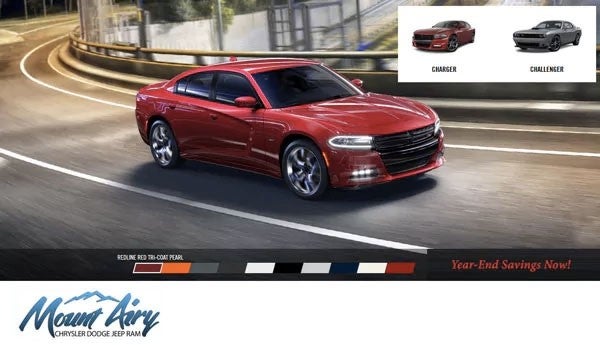
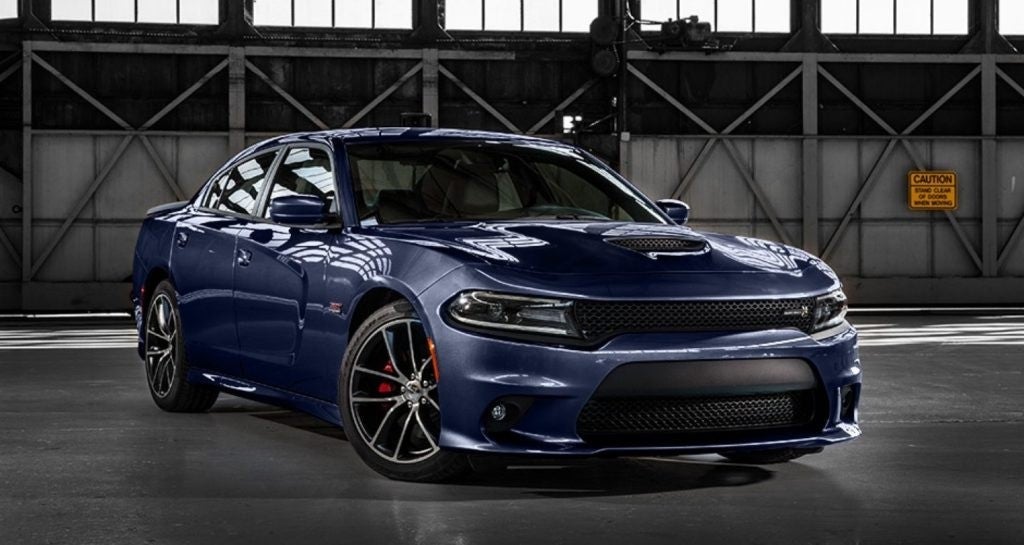
The 2017 Dodge Charger and the 2017 Dodge Challenger are THE muscle cars of the future. The Dodge Charger and Dodge Challenger provide that safe, impressive driving experience in cars that rate a 10 for looks. Looks can be deceiving sometimes, but both the Charger and the Challenger are handsome vehicles that run smoothly and efficiently. The stellar, knowledgeable team at Mount Airy Chrysler Dodge Jeep Ram wants you to be informed car buyers this holiday season. If you are in the market for a sporty, handsome ride, the Charger and the Challenger are truly your choices to consider. The Dodge Charger The 2017 Dodge Charger needs to be seen, not just read about. Check out this impressive model found at Mount Airy Chrysler Dodge Jeep Ram: 2017 Dodge Charger R/T 392 Sedan. Let’s consider ample reasons why the 2017 Dodge Charger is the perfect full-sized sedan that blends muscle car looks, technology, and performance. Whether it’s the Charger SE and SXT’s 3.6 liter V-6 or the R/T’s 5.7 liter V-8, the Dodge Charger’s engine, teamed up with a standard 8-speed automatic transmission, provides a smooth ride on the highway and the scenic mountains. The 2017 Charger does not skimp on roominess. It seats up to 5 passengers with its 104.7 cubic feet of interior space, and it provides 16.5 cubic feet of trunk space. The 2017 Charger’s handsomeness makes it the Brad Pitt of muscle cars. Its sporty, racy structure takes you right back to the 1960’s muscle cars. The hood’s sculpture stresses the Charger’s muscular curves, and the available 3-piece rear spoiler will have passing cars stare in envy. Add the available power sunroof and you will have to find reasons not to hop in for a drive. The 2017 Charger’s award-winning safety measures cannot go ignored. It earned the ultimate 5-star overall safety rating from the National Highway Traffic Safety Administration. It’s designed with front and rear crumple zones that absorb a significant brunt of a side-impact. Its All-Speed Traction Control provides safe traction on the road by limiting wheel spin. 2017 Charger models with a V-6 get 19 miles per gallon for city driving and 30 mpg on the highway. The Dodge Challenger The Dodge Challenger is certain to wow and impress you with its bold size and retro design. Like the Charger, the Dodge Challenger needs to be seen to be believed. Here are a few models now available at Mount Airy Chrysler Dodge Jeep Ram: Dodge Challenger R/T Coupe, Dodge Challenger R/T Scat Pack Coupe, and Dodge Challenger SRT Hellcat Coupe. Let’s take a look at what the Dodge Challenger has in store for you. The Dodge Challenger is 70’s retro with 21 st century bold design, including its heritage-inspired split grille, available body-side striping, and projector headlamps with LED halos. The Dodge Challenger means business when it comes to interior space. This muscle car seats 5. The Dodge Challenger is equipped with the following engines, depending on the model you prefer: a 3.6-liter, 305-horsepower V6 and three Hemi V8s; a 5.7-liter with 372 horsepower, and a 6.4-liter of 485 horsepower. Similar to the Dodge Charger, the Challenger with V-6 engines get 19 mpg city and 30 mpg highway. The Challenger comes equipped with a 5.0-inch Uconnect center touchscreen, Bluetooth, and a 7.0-inch instrument panel display system. The Challenger offers an expansive trunk storage of 16.2 cubic feet. It’s holiday season. Treat yourself to a bold, impressive present: a brand-new muscle car. Whether it’s the Dodge Challenger or the Dodge Charger, you will not be disappointed. Come down to Mount Airy Chrysler Dodge Jeep Ram and check out the muscle cars yearning to be driven off in style. Chris Folk, Staff Blogger CCP Web Design, Mount Airy CDJRF Writer

Snow Day Special

Celebrate Snow Days with Mount Airy Chrysler Dodger Jeep Ram and Save $500 on a New Car

A snow day is a delightful unexpected treat that conjures up happy feelings, and not just for kids.  The Carolina blue sky doesn’t give us many snow days, but when it does we believe it's something to celebrate.  Here at Mount Airy Chrysler Dodger Jeep Ram we want to know how you celebrate these unpredictable days when you have new-found time on your hands. Send a photo of how you and/or your friends and family are celebrating the wonder of "down-time".  Send it in digitally or bring it to us and you'll received $500.00 off any new car! Does a cold snowy day make you want to cook your favorite comfort food, bundle up the kids for some downhill sledding or snuggle up with a good book?  Maybe you never get out of your pajamas and binge watch your favorite TV sit-com.  For many of us it's a free day, or a gift of time not planned. Capture how you celebrate the free time of a snow day and we'll save you $500.00 on your next new car. There's any number ways to show off your pictures.  Bring it in, drop it off, or post it using the hashtag  #MountAirysnowdays on Facebook, Instagram and Twitter.  The Celebrate Snow Days $500 offer is also available at our other NC dealerships, Mount Airy Toyota Scion and Liberty Buick GMC. The Celebrate Snow Days $500 offer is available to new car buyers until Friday, February 28 th. Mount Airy Chrysler Dodger Jeep Ram now has many 2014 and 2015 models in stock.  Call one of our customer service representatives at (888) 486-2718 and we'll make sure there's a car waiting for you to take a test drive.   Don't worry, we'll warm the car up before you get here!

Dodge Charger

2015 Dodge Charger: A Muscle Car From the Future

Initially the Dodge Charger, like the Ford Mustang, was made as a sporty muscle car at an affordable price--it was powerful, fast, cool.  Today's model has taken these standards and built upon them, updating to the needs of the modern driver.  It has slightly backed away from the muscle car style to create a modern, sleek version of its original self.  Don't get me wrong, the 2015 Dodge Charger still maintains its tough exterior, just in a way that feels more like a muscle car from the future. The 2015 model features five different trim levels to create a vehicle that meets anyone's needs.  It comes as the SE, SXT, and the R/T-- and within each trim level there are various options to choose from, allowing you to pick and choose on an incredibly minute level.  But regardless of wich trim you end up choosing, you are guaranteed a quality ride and that venerated muscle car feel. At first glance, the new Charger seems to be sleeker and more tightly knit than last year's model.  The front hood has been lowered, beveling downward and over the front, spilling in symmetrical shapes.  The front and back-ends have been blunted, giving it muscle and sharp contrast.  And the rap-around LED light really makes it glimmer. Inside, the Charger is spacious with metallic accents and smooth surfaces.  It comes with a 7-inch thin film TFT screen set up for 3-D navigation, and plenty of apps.  The dark tones and ergonomic designed seats, combined with a top-of-the-line engine that allows for quickness off the line and tightly hugged curves, create the optimum riding experience. I recommend that you take some time, find which trim level best fits you and your driving style-- but not before you test drive one.  That, I recommend you do right away -- you won't be sorry you did. by Andrea Bergeron, CCP Web Design Staff Writer

Contact Us

Fill out this form below and we'll contact you shortly
*Required Fields